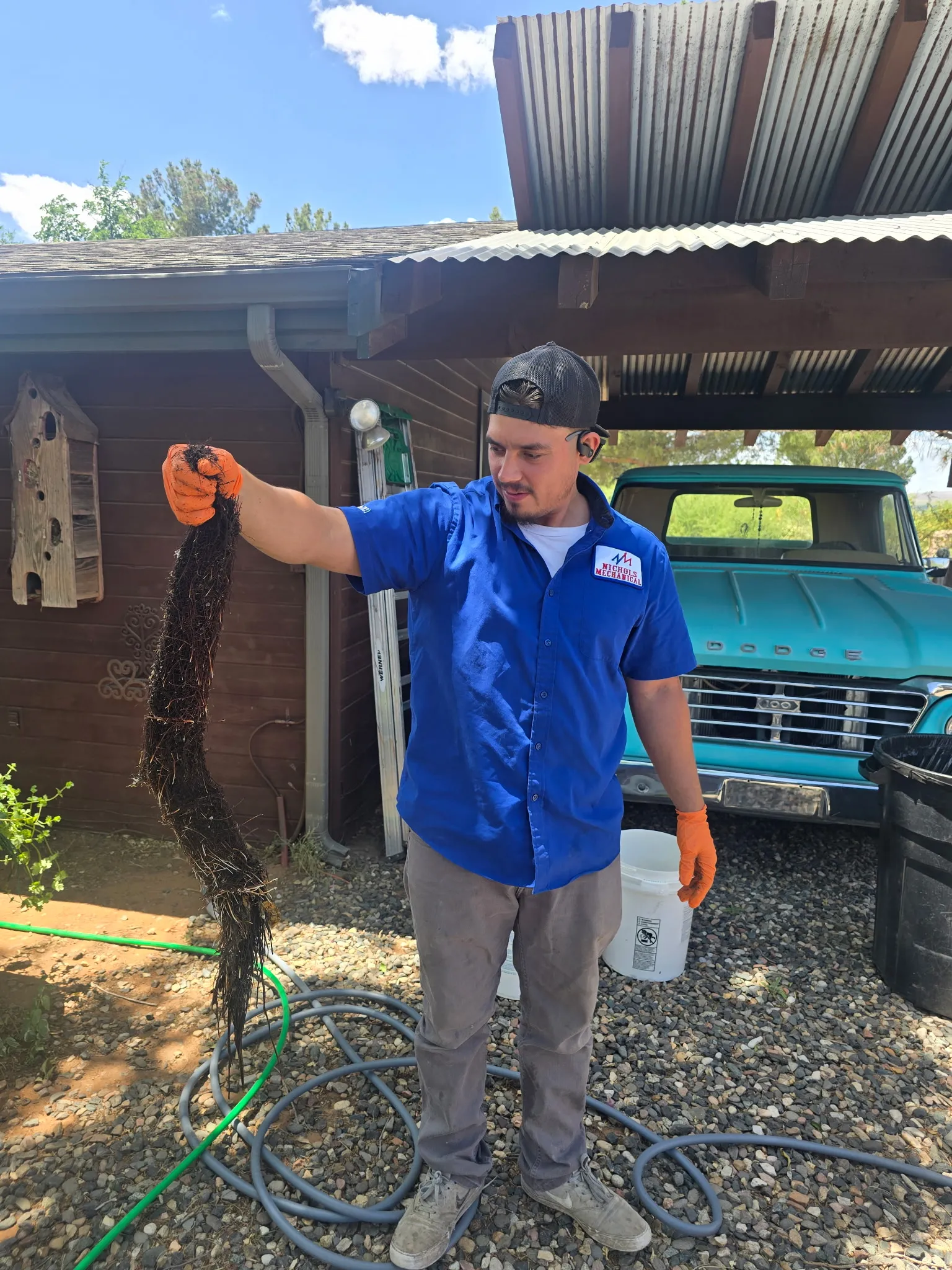
Start by counting slow drains. If it's just one sink, tub or toilet, it's almost always a clog in that drain line. If every drain is slow, the lowest tub or shower backs up first, or toilets gurgle when the washer drains, the problem is further out: the main line, the septic tank or the leach field.
Knowing which one you have tells you who to call and what not to do while you wait. Here's how to tell, using a few simple checks.
Start here: how many drains are slow?
Every drain in your house runs into one main line, and that line runs out to the septic tank. A problem in one branch only affects that branch. A problem at the main line, the tank or the field affects everything upstream of it. That's why counting slow drains tells you so much.
| What you notice | Usually points to |
|---|---|
| One slow sink, tub or toilet | A clog in that one drain line |
| Every drain slow, lowest tub or shower backs up first | Main line, full tank or leach field |
| Toilets or drains gurgle when the washer empties | Partial main line clog, blocked roof vent or a tank that's too full |
| Water seeps up around a toilet when you shower | Backup in the main line or tank |
| Sewage smell outside, near the tank or yard | Loose lid, tank due for pumping or a field that isn't absorbing |
| Soggy ground or bright green grass over the leach field | Saturated or failing leach field |
A simple test you can do
You don't need tools for this. Just pay attention to where water goes.
- Run water in a sink on the far end of the house. Does that sink drain slowly, or only the one that started acting up?
- Flush a toilet, then watch the lowest tub or shower in the house. Water coming up there means the backup is past where the branches meet.
- Run the washing machine through a drain cycle. Gurgling in nearby toilets or drains while it empties points to the main line or the tank.
- If you know where your outdoor cleanout is, look inside it. Standing water in the cleanout means the blockage is between there and the tank, or the tank itself. A dry cleanout points back inside the house.
What a "full" septic tank really means
A working septic tank is always filled with liquid up to its outlet. That's normal. The problem is the layer of solids, called sludge, that builds up on the bottom and the scum that floats on top. When those layers get too thick, solids start leaving the tank and heading for the leach field. That's when drains slow down and the field starts to clog.
The U.S. Environmental Protection Agency recommends inspecting a septic system every 1 to 3 years and pumping the tank every 3 to 5 years. Bigger households, a garbage disposal or a small tank mean more often. If you can't remember the last time yours was pumped, that alone is a good reason to have it checked.
Septic additives don't replace pumping. A healthy tank already has the bacteria it needs.
Signs the problem is the leach field
The leach field is the set of trenches where liquid from the tank soaks into the soil. If the field stops absorbing, the whole system backs up even when the tank was just pumped. Look for:
- Soggy ground or standing water over the field, especially when it hasn't rained
- Grass that's greener and thicker over the trenches than the rest of the yard
- A sewage smell near the field
- Backups that come back soon after the tank is pumped
- Slow drains that get worse after heavy rain, when the ground is already soaked
What to do right now
- Cut back on water: hold off on laundry, the dishwasher and long showers until it's checked
- Don't pour chemical drain cleaners down the drain. They can kill the bacteria your tank needs and won't fix a full tank or a clogged field
- Don't drive or park over the tank or leach field
- If sewage is coming into the house, stop running water and call right away
If you want to clear a single slow drain yourself, start with the safer methods in our guide to unclogging drains without harsh chemicals.
What we hear from septic owners
Not knowing which side the problem is on comes up regularly on our calls. One landlord with a rental where "the sinks and toilets and everything is backing up" told us they were "trying to deduce whether it's a plumbing problem or a septic problem." Another homeowner said, "Anytime we run a shower or flush a toilet, water leaks from the bottom of our other toilets."
Sometimes it's both. One customer found out they had "more of a septic problem than anything," plus a grease clog between the cleanout and the house. Other calls start with gurgling in the pipes, a septic smell in a toilet, or a leach field that's saturated.
Why one visit should check both
If a plumber only clears the drain, a full tank keeps backing up. If a septic company only pumps the tank, a clog in the line keeps backing up. That's why we check the whole path. When the whole house is slow, we camera the line from the house to the tank, check the tank level and look at the field, so we fix the cause, not the symptom.
We do plumbing and septic, so one visit covers both. See our septic services for repairs, leach fields and new systems. We work in Cottonwood and across the Verde Valley and Prescott area. See all service areas.
Questions
Drains backing up?
Call the Nichols crew. We do plumbing and septic, so one call covers both.
We answer 24/7 · Price before work starts