The size of AC you need for your Arizona home is critical, and getting it wrong is one of the most common mistakes homeowners make when buying a new system. An oversized or undersized HVAC system can lead to higher utility bills and frequent repairs while shortening the system's lifespan.
You need to know what size AC unit you need, and that requires more than checking an AC size chart. Arizona's summer heat, your home's insulation, and proper load calculations all play a role in how to size a heating and air conditioning system correctly. This guide walks you through the process to ensure your new system delivers optimal comfort and efficiency.
Understanding AC Sizing Basics for Arizona
Air conditioner sizing revolves around two measurement systems that work together to determine cooling capacity. BTU stands for British Thermal Unit, which measures the amount of heat required to raise or lower the temperature of one pound of water by one degree Fahrenheit. Your AC's BTU rating tells you how much heat the system can remove from your home within an hour.
What BTUs and Tons Mean
HVAC professionals talk about tonnage, but they're not referring to weight. One ton of cooling capacity equals 12,000 BTUs per hour. A 3-ton air conditioner can remove 36,000 BTUs of heat each hour. A 5-ton system handles 60,000 BTUs per hour. Residential systems range from 1.5 to 5 tons, with half-ton increments available.
The standard recommendation suggests 20 BTUs per square foot of living space. You'd multiply 1,400 by 20 to get 28,000 BTUs for a 1,400-square-foot home, or about a 2.5-ton unit. This general calculation has evolved over time. Contractors used 500 square feet per ton as the rule thirty years ago. This changed to 600 square feet per ton for existing homes more recently. Modern insulation standards in new construction mean some homes may need just one ton for every 1,000 square feet.
How Arizona Heat Changes Sizing Requirements
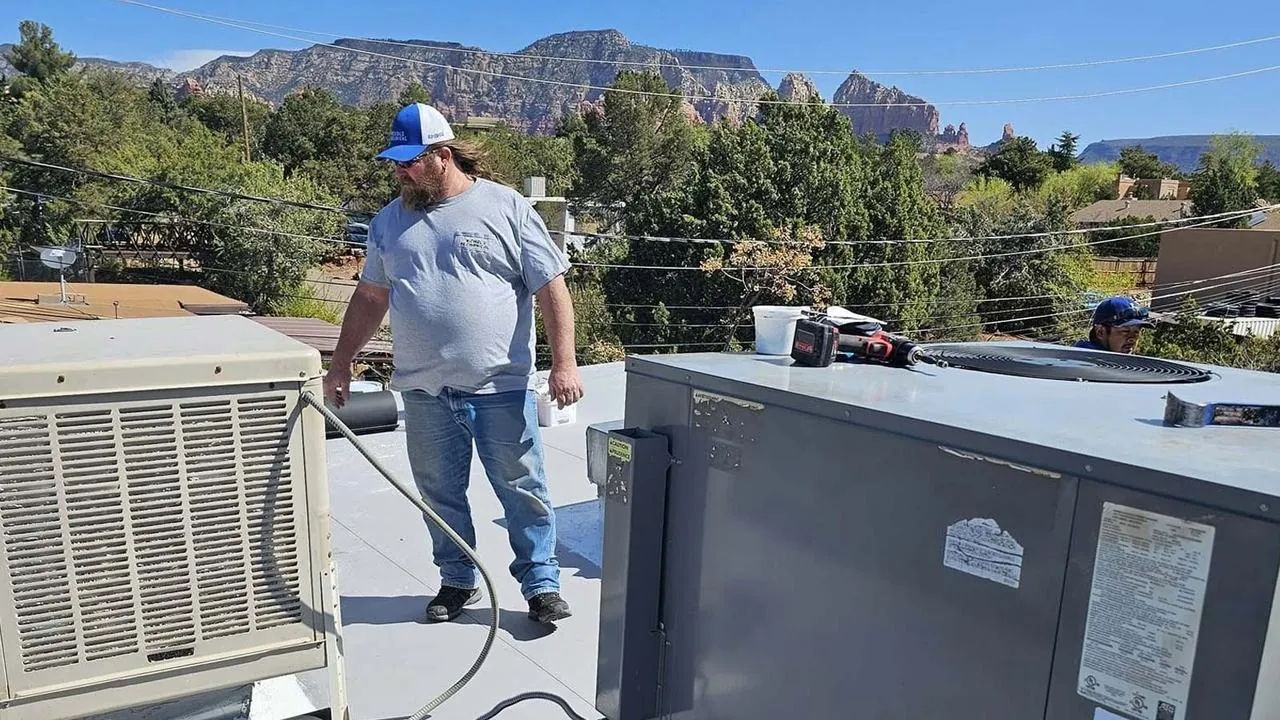
Arizona's climate varies a lot by elevation, so standard calculations only go so far. The state spans several climate zones, and a home in the Verde Valley or Prescott needs a different answer than one in the low desert.
Arizona homes face intense sunlight. In Cottonwood, summer highs are in the upper 90s and can top 100°F, mostly June to August, while Prescott-area highs are mostly in the upper 80s to low 90s. Sun exposure matters. South-facing and west-facing homes receive more direct sunlight and require AC units to run longer to maintain comfortable temperatures. Window types affect your BTU requirements as well. Single-pane windows demand higher tonnage compared to energy-efficient double-pane windows. Ceiling height, heat-generating appliances and the number of occupants all increase your home's cooling load.
The Cost of Getting It Wrong
Oversized systems are common and create systemic comfort and efficiency problems. An air conditioner sized right should complete two to three cycles per hour, with each cycle lasting 10 to 15 minutes. An oversized system reaches the target temperature too fast and shuts off and restarts in a pattern called short-cycling.
Short-cycling prevents your system from dehumidifying your home the right way. Cooling involves both temperature reduction and moisture removal. Your AC shuts off too soon and runs too short to extract enough moisture from the air. Your home feels cold but clammy. Excess humidity damages property and reduces indoor air quality.
The constant on-and-off pattern increases energy consumption because system startup requires the most power. This drives up electricity bills despite having a larger and more powerful unit. Components like compressors and blower motors experience accelerated wear from frequent cycling. More breakdowns and a shortened service life follow.
An undersized system creates similar problems through a different mechanism. Your AC runs long cycles without adequate capacity and never quite cools your home enough. The unit operates all the time trying to reach a temperature it cannot achieve. Energy costs increase while comfort fails to arrive. Nichols performs detailed load calculations to ensure your system matches your home's actual cooling requirements and avoids these costly sizing mistakes.
Step-by-Step Guide to Sizing Your AC
Determining the right HVAC system size requires a methodical approach that goes beyond simple guesswork. The process involves four distinct steps, and each builds upon the previous one to ensure accurate results.
Step 1: Measure Your Home's Square Footage
Start by measuring the length and width of each room you plan to cool. Multiply these dimensions to calculate the square footage of individual spaces. Break down rooms with irregular shapes into simple rectangles or squares. Calculate each area separately, then add the totals together.
Exclude areas that don't require climate control, such as garages, unfinished basements, or storage spaces. Your home's blueprints may already contain this information and save you measurement time. Add individual room measurements together for your total conditioned square footage once you have them.
Professional contractors use two calculation approaches. Whole-house calculations determine total system capacity requirements and work well for single-zone systems. Room-by-room calculations prove necessary for multi-zone systems, duct design, and identifying problem areas. South- and west-facing rooms may need noticeably more cooling than north-facing rooms of similar size.
Step 2: Consider Arizona-Specific Factors
Arizona homes require review of factors that affect cooling loads beyond square footage. Window specifications matter a lot. Record the size, type, orientation, and shading for each window. Note frame materials and glazing specifications when available. The number and design of windows affect heat transfer rates throughout different seasons.
Building construction and insulation types influence heat transfer. Professionals assess insulation in walls, ceilings, and floors through construction plans or physical inspection. External factors like airtightness, sun exposure, and window placement affect insulation effectiveness.
Internal heat sources require attention as well. The number of occupants generates additional heat, and each person adds to internal heat gain. Appliances and electronics contribute heat that your AC must remove. Outdoor air infiltration through gaps and cracks affects total heating and cooling loads.
Step 3: Request a Professional Load Calculation
Manual J represents the industry-standard method developed by the Air Conditioning Contractors of America (ACCA) to determine proper heating and cooling capacity. This ANSI-recognized standard applies to single-family detached homes, small multi-unit structures, condominiums, townhouses, and manufactured homes. National building codes and most state and local jurisdictions require proper load calculations performed according to Manual J procedures.
Contractors should conduct physical site surveys. They measure room dimensions and ceiling heights, identify wall and roof construction types, catalog windows and doors with specifications, assess insulation levels, and document internal heat sources. They must gather local climate data that includes outdoor design temperatures, humidity levels, and solar radiation data specific to your location.
Professional calculations account for dozens of variables that simplified tools miss. These include detailed building envelope analysis, duct system design and losses, and solar heat gain through windows at different orientations. Nichols performs these complete Manual J calculations to ensure accurate system sizing for your Arizona home.
Step 4: Review System Efficiency Ratings
Review efficiency ratings after determining proper size. SEER (Seasonal Energy Efficiency Ratio) measures cooling efficiency over an entire season. You calculate it by dividing total cooling output by total electrical energy input. Higher SEER ratings indicate more efficient systems.
Consider EER (Energy Efficiency Ratio) for Arizona's climate. EER measures cooling efficiency at a specific outdoor temperature of 95°F. EER provides a better performance indicator for areas that experience prolonged temperatures at or above 95 degrees. Hot Verde Valley summers make EER ratings relevant when you select your system.
Arizona Climate Factors That Impact AC Size
Arizona's climate creates unique challenges that affect what size air conditioner you need. Cottonwood sits at about 3,300 feet, with summer highs in the upper 90s that can top 100°F, mostly June to August. Prescott and Prescott Valley, at about 5,000–5,400 feet, see summer highs mostly in the upper 80s to low 90s. The same house usually needs less cooling in Prescott than in Cottonwood.
Direct Sunlight and Home Orientation
Direct sunlight exposure affects your cooling requirements substantially. North-facing homes generally need less cooling. West-facing and south-facing homes receive prolonged afternoon sun exposure and require AC systems to work much harder. Direct sun raises the surface temperature of your outdoor unit and pushes up internal pressure while reducing the system's capacity to release heat.
Insulation Standards in Arizona Construction
Arizona does not maintain a mandatory state-wide energy code. Local governments determine code requirements at the individual level. The state contains four distinct climate zones: Climate Zone 2 covers Southwest Arizona, Climate Zone 3 includes Northwest and Southeast Arizona, while Climate Zone 4 and 5 apply to Central and Northeast Arizona respectively. These varying zones require different insulation approaches for proper thermal performance.
Number of Occupants and Heat-Generating Appliances
Internal heat sources add to your cooling load calculations. Each person generates approximately 230 BTU/hr of sensible heat and 200 BTU/hr of latent heat. The standard assumes the number of bedrooms plus one person for residential load calculations. Appliances contribute additional heat that your AC must remove. Every watt of electricity consumed by equipment becomes heat indoors and converts at a rate of 3.413 BTU per watt.
A 1,200-watt appliance generates roughly 4,100 BTU/hr of heat. Nichols accounts for these internal heat gains when performing load calculations to ensure your system handles Arizona's extreme climate conditions.
Working with Nichols for Proper AC Sizing
Professional HVAC sizing begins with understanding your home's unique characteristics rather than applying generic formulas. Expert evaluation gets you the right system from the start.
Complete Home Evaluation Process
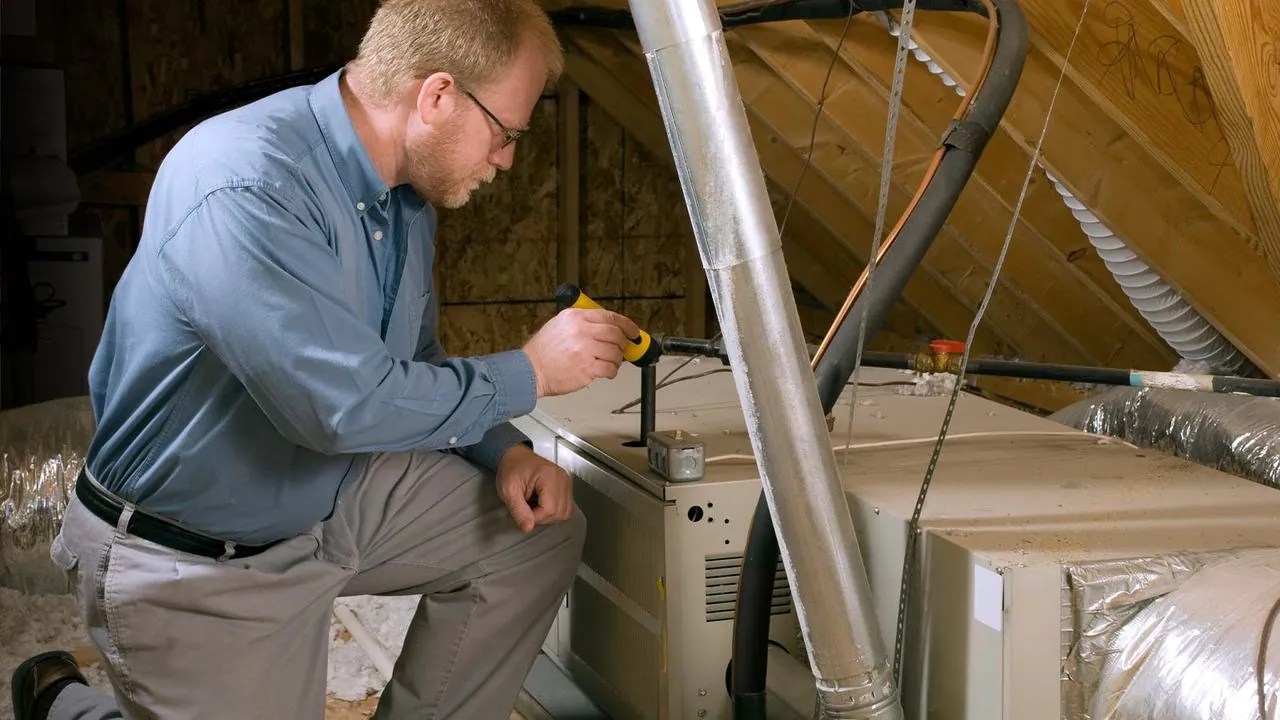
Nichols starts by assessing your property's specific cooling requirements. Technicians examine your home's square footage, layout configuration and ductwork design while considering your household's daily usage patterns. This evaluation identifies factors that affect cooling demands. These include ductwork condition and airflow requirements. Proper assessment accounts for elements like window placement, insulation levels and exterior shading.
Expert Manual J Calculations
Skilled technicians use load calculations to select a system sized correctly for your home. This prevents undersized units that struggle or oversized units that waste energy. Manual J calculations produce a detailed, room-by-room analysis of cooling needs. This recognized method has contractors match equipment to your home rather than relying on square footage alone. Nichols performs these complete calculations and accounts for your home's envelope, ductwork needs and solar heat gain through windows at different orientations.
Tailored AC Recommendations for Your Budget
Load calculations help Nichols select the best system for your comfort needs. Technicians guide you through equipment options and explain how different models meet your calculated cooling requirements. Proper equipment selection maximizes efficiency and system longevity. Recommendations balance performance requirements with your household priorities.
Professional Installation and Long-Term Support
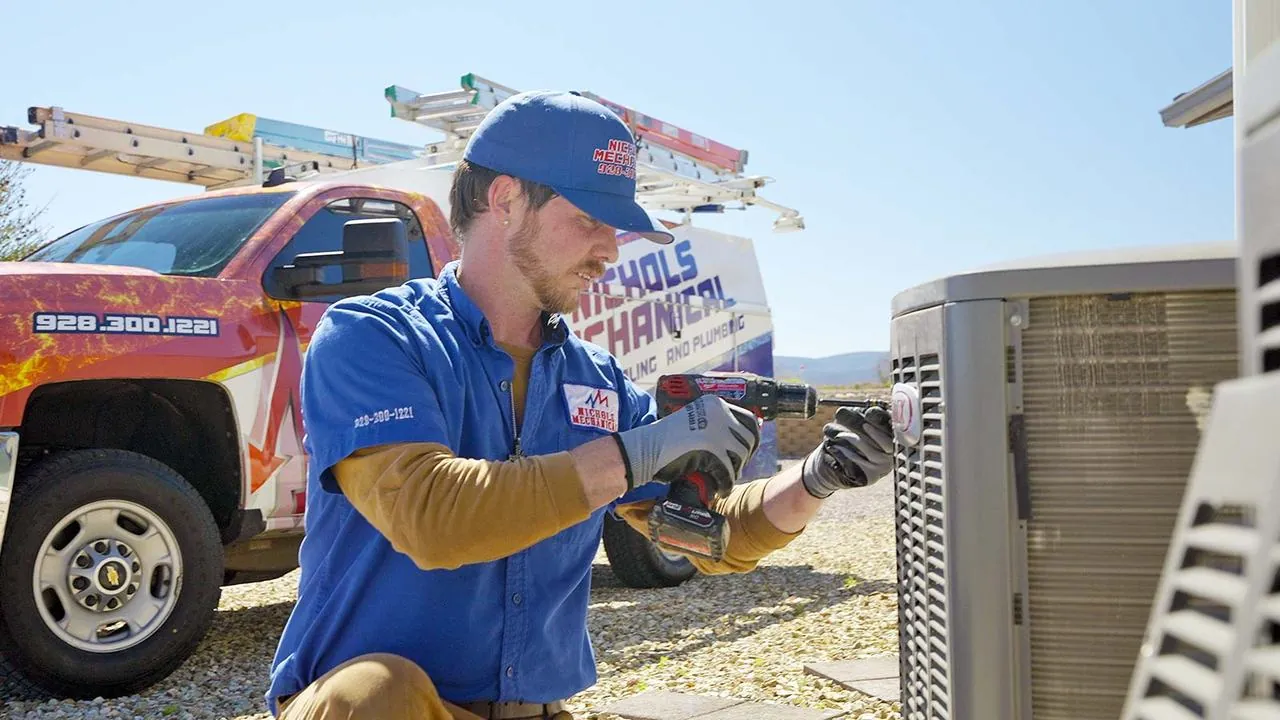
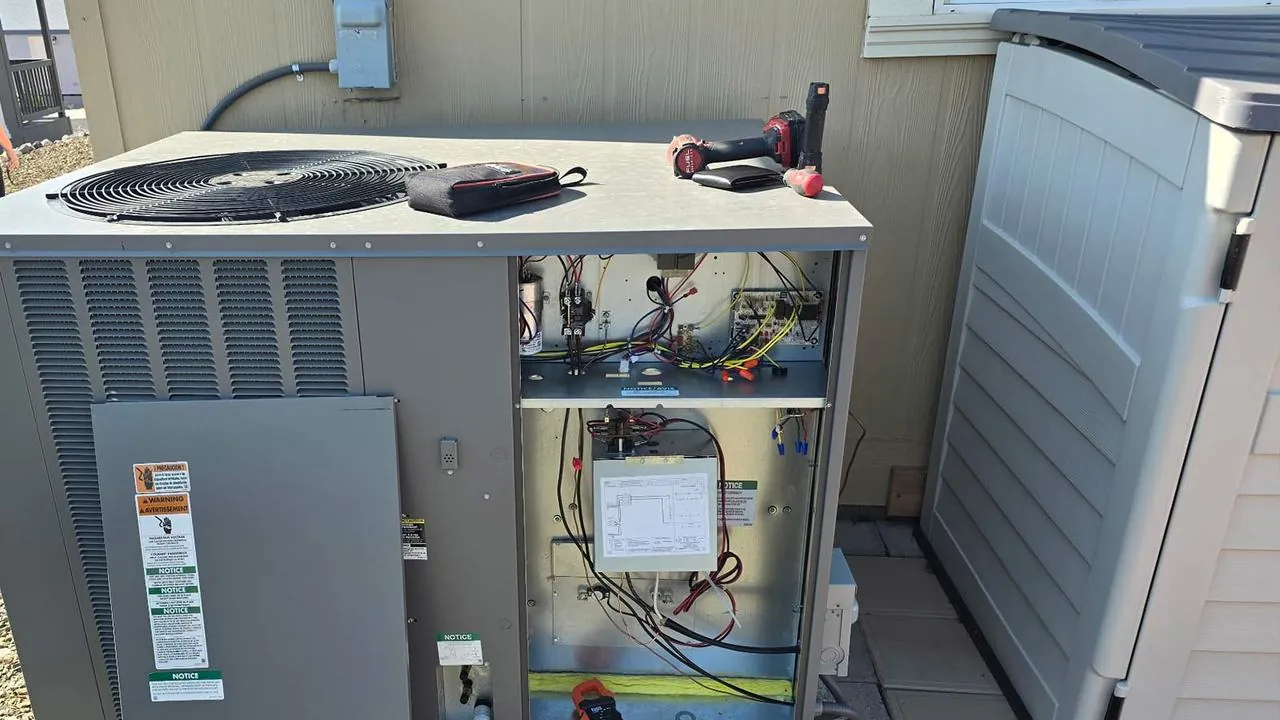
Professional installation from Nichols helps your system run efficiently and reduces energy consumption. Proper setup minimizes strain on components and cuts down on unexpected breakdowns. Technicians provide guidance on maintenance schedules that include filter cleaning, refrigerant level checks and system component testing. This proactive approach extends system lifespan and prevents premature failures. Nichols offers continued support after installation. You get a trusted partner for regular tune-ups and necessary repairs.
Common AC Sizing Mistakes Arizona Homeowners Make
Homeowners make avoidable errors when they select air conditioning systems. Misconceptions about proper sizing methods cause these mistakes. You can avoid expensive errors when you understand these pitfalls.
Buying the Biggest Unit Available
The "bigger is better" mentality creates many of the biggest problems in HVAC sizing. Field studies consistently find oversizing among the most common installation problems, and many contractors assume existing systems are too small and install even larger replacements.
Relying Only on Square Footage
Rules of thumb like 400 to 600 square feet per ton fail to account for window type and orientation. They also ignore airtightness and insulation levels. Manual J calculations often show actual cooling loads are lower than rule-of-thumb numbers, especially in newer, well-insulated homes.
Skipping the Professional Load Calculation
Many contractors skip Manual J calculations and simply replace existing systems with similar sizes. This perpetuates oversizing problems for another 15 to 20 years. Nichols performs proper load calculations to prevent these issues.
Ignoring Local Climate Considerations
Climate changes everything. The same house generally needs less cooling in Prescott than in Cottonwood, and less in Cottonwood than in the low desert.
Conclusion
Getting the right AC size for your Arizona home requires more than quick calculations or generic formulas. Oversizing is common, so professional load calculations make the difference between comfort and expensive mistakes.
Arizona's extreme heat and your home's unique characteristics need expert evaluation. You invest in efficiency and reliable comfort when you work with Nichols for complete Manual J calculations rather than guess at capacity requirements.
Skip the common sizing errors that lead to short-cycling and high energy bills.
Key Takeaways
Proper AC sizing is critical for Arizona homes, where oversized systems are common, leading to higher bills and comfort issues.
• Arizona's climate varies by elevation, so the right size depends on where your home is and how it's built.
• Professional Manual J load calculations are essential - never rely solely on square footage or "bigger is better" mentality when sizing your system.
• Oversized units short-cycle, failing to dehumidify properly while increasing energy costs and reducing equipment lifespan through frequent on-off cycling.
• Arizona-specific factors like direct sunlight exposure, home orientation, and internal heat sources dramatically impact your cooling requirements beyond basic measurements.
• Working with qualified professionals like Nichols ensures comprehensive evaluation, proper calculations, and long-term system performance tailored to your home's unique needs.
The bottom line: In Arizona's harsh climate, proper AC sizing isn't just about comfort—it's about avoiding costly mistakes that can plague your home for 15-20 years. Professional load calculations account for dozens of variables that simple rules of thumb miss, ensuring your system delivers optimal efficiency and reliability.
FAQs
Q1. What size air conditioner do I need for my Arizona home? There's no single number. The right size depends on multiple factors including your local climate, your home's square footage, insulation quality, window types, sun exposure, and the number of occupants. A professional Manual J load calculation is essential to determine the precise tonnage needed for optimal performance.
Q2. How do I calculate the right AC size for a 2,000 square foot house? Start with the square footage, then account for your local climate, ceiling height, insulation levels, window orientation, and internal heat sources. Rules of thumb can give very different answers for the same 2,000 square foot home, so a Manual J load calculation is the reliable way to size it.
Q3. What are the best AC brands for handling Arizona's extreme heat? Major brands such as Trane, Carrier, and Lennox all build systems capable of handling Arizona summers. When selecting a brand, focus on both SEER and EER ratings, as EER better indicates performance at 95°F and above. Proper sizing and installation matter more than the brand.
Q4. What happens if my AC unit is too big for my home? An oversized AC unit will short-cycle, turning on and off frequently without running long enough to properly dehumidify your home. This leads to higher energy bills, uneven temperatures, excess humidity, increased wear on components, and a shortened system lifespan. The constant starting and stopping consumes more electricity and prevents the unit from completing full cooling cycles that remove moisture effectively.
Q5. Why can't I just use square footage alone to size my AC? Square footage rules of thumb fail to account for critical factors like window type and orientation, insulation levels, ceiling height, airtightness, sun exposure, and internal heat sources from occupants and appliances. Arizona's extreme climate makes these variables even more important. Professional Manual J load calculations consider dozens of specific factors to ensure accurate sizing rather than relying on generic formulas that often result in oversized systems.