Homeowners moving up from the low desert often assume a heat pump is obviously the right call, because that is what works down the hill. Homeowners arriving from colder states often assume the opposite. Both instincts miss what makes this area distinctive: Prescott sits near 5,400 feet, with mild sunny afternoons and winter nights that drop well below freezing, sometimes in the same twenty-four hours.
That combination is what makes this a real decision rather than an obvious one. This guide walks through how each system produces heat, how Prescott conditions affect both, why dual fuel deserves a place in the conversation, and how to figure out which one suits your specific home.
The Short Answer
For most Prescott-area homes, a modern cold-climate heat pump is a workable primary heating system, and it has the significant advantage of replacing your air conditioner at the same time. A gas furnace remains the stronger choice if your home has existing natural gas service, you want consistent output on the coldest nights without thinking about it, or your ductwork and layout make a high-output furnace the easier retrofit.
And if you want the honest technical answer rather than a simplified one: a dual fuel system that uses both is usually the best match for this climate. Whether it is worth the extra installation cost is a separate question that depends on your home and how long you plan to stay in it.
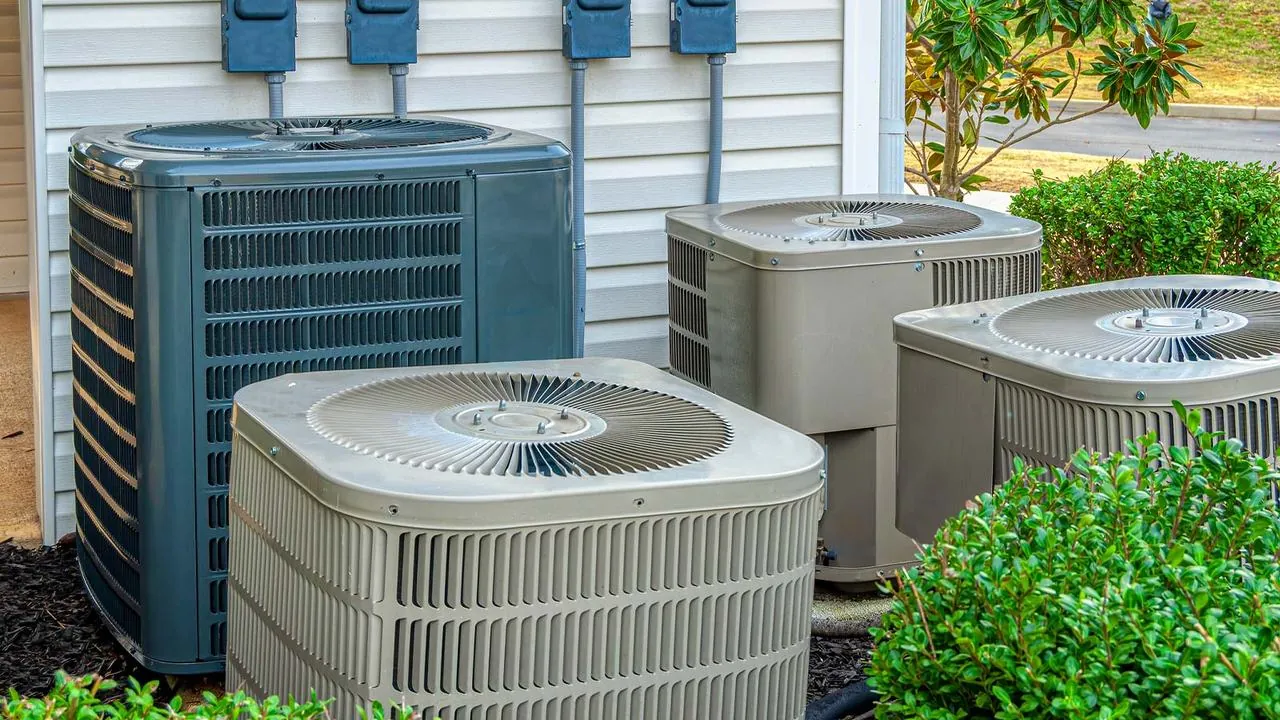
How Each System Makes Heat
A gas furnace creates heat
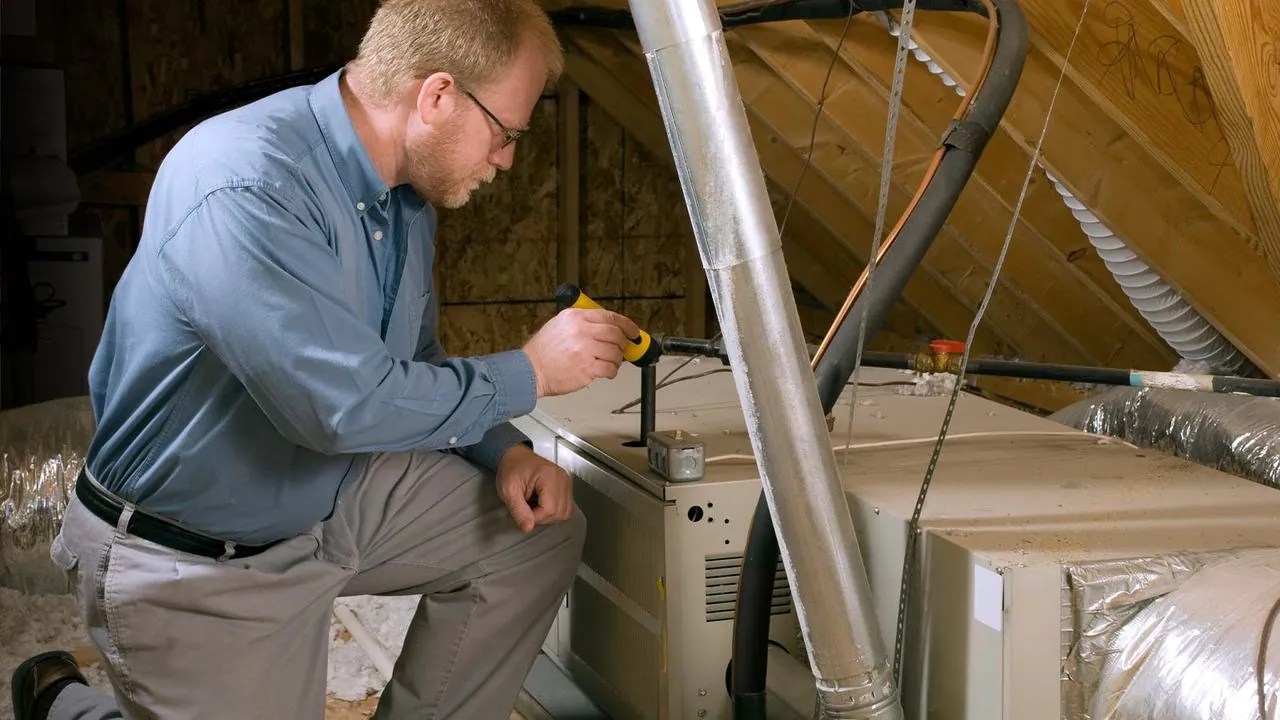
A furnace burns natural gas or propane in a sealed combustion chamber. The heat exchanger transfers that heat to air moving across it, and the blower pushes warm air through the ductwork. Because it is generating heat through combustion, its output does not change when the weather does. A furnace delivers the same warm supply air at twenty degrees outside as it does at fifty.
A heat pump moves heat
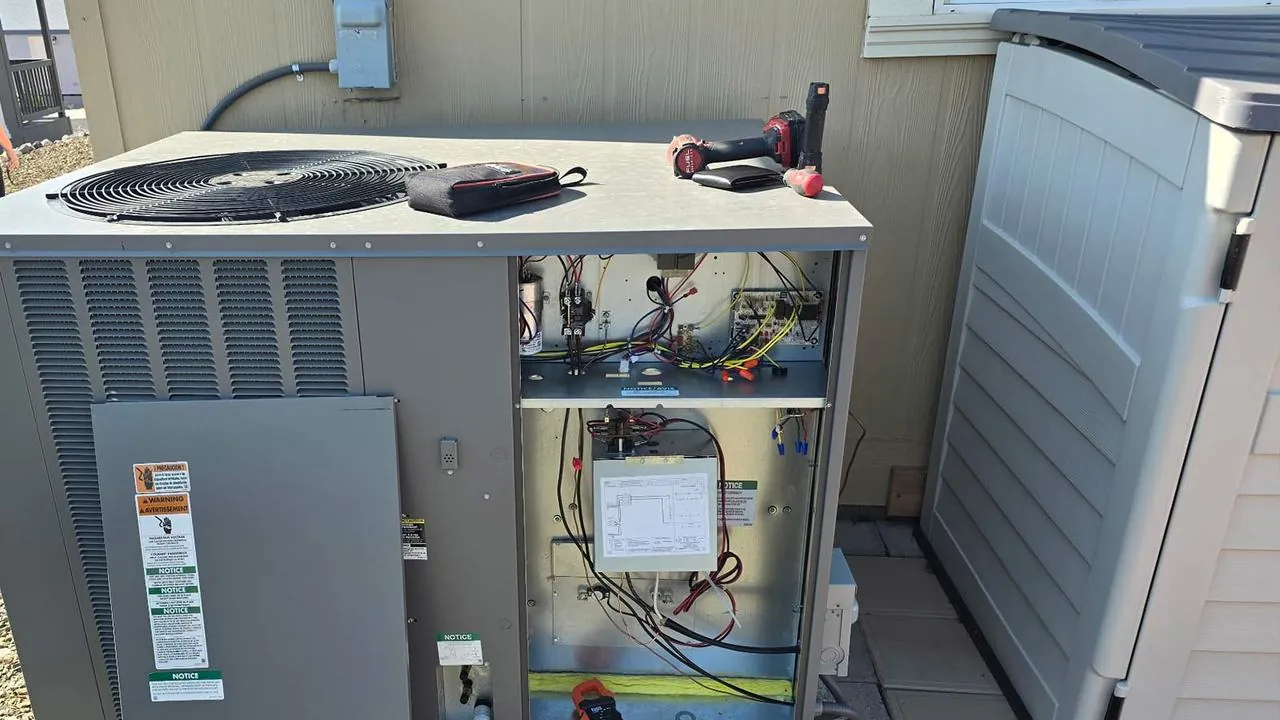
A heat pump does not create heat. It moves it. Even cold outdoor air contains thermal energy, and a heat pump uses refrigerant and a compressor to extract that energy and bring it indoors. In summer the cycle reverses and it works exactly like an air conditioner, pushing heat out of the house instead.
Because it is moving existing heat rather than generating new heat, a heat pump can deliver several units of heat energy for each unit of electricity it consumes. That is why its efficiency figures look so different from a furnace. The catch is that as outdoor air gets colder, there is less heat available to move, so capacity falls exactly when demand rises.
Why Prescott Changes the Math
Three features of the local climate matter to this decision.
Elevation and cold nights
At roughly 5,400 feet, Prescott gets a genuine winter. Freezing overnight lows are routine from late fall through early spring, and hard freezes are normal rather than exceptional. That is well past the point where an older standard heat pump would need supplemental electric heat strips to keep up, and electric resistance heat is the least efficient way to warm a house.
Mild daytime highs
The other half of the picture is that Prescott winter afternoons are often pleasant. Sun and mild highs mean a large share of annual heating hours happen in conditions where a heat pump is operating at its most efficient. A furnace has no equivalent advantage during mild weather. It runs the same way regardless.
A real cooling season
Prescott summers require air conditioning. That matters because a heat pump covers cooling as part of the same equipment, while a furnace requires a separate air conditioner. When you compare replacement cost honestly, you are often comparing one system to two. Our post on SEER ratings and Prescott altitudes covers the cooling side of that equation.
Worth checking first: not every home in the Prescott area has natural gas service. Outside the city, propane is common, and propane changes the furnace operating cost picture considerably. Confirm what fuel your address can actually get before comparing systems.
Side-by-Side Comparison
| Consideration | Heat pump | Gas furnace |
|---|---|---|
| Heating and cooling | Both, from one system | Heating only; needs a separate AC |
| Performance in deep cold | Capacity falls as it gets colder; cold-climate models hold up much better | Consistent output regardless of outdoor temperature |
| Supply air temperature | Cooler, steadier air over longer run times | Hotter air in shorter bursts |
| Fuel required | Electricity only | Natural gas or propane, plus electricity for the blower |
| Combustion safety | No combustion, no flue, no carbon monoxide risk | Requires venting and annual combustion safety checks |
| Altitude effects | Not derated for altitude; capacity is affected by cold instead | Combustion output derated above certain elevations |
| Expected service life | Shorter, since it runs year round | Longer, since it only runs in winter |
| Installation cost | Higher than a furnace alone; comparable to furnace plus AC | Lower on its own, higher once you add the AC |
Cold-Climate Heat Pumps Changed the Conversation
Most of the received wisdom that heat pumps cannot handle real winters comes from single-stage equipment designed decades ago. Those systems lost capacity quickly below freezing and leaned hard on electric backup heat.
Current cold-climate models use variable-speed inverter compressors and improved refrigerant control to hold a much larger share of their rated capacity at low outdoor temperatures. In practice that means they carry the load through most of a Prescott winter without falling back on resistance heat, and they modulate rather than cycling on and off, which produces steadier indoor temperatures.
- Look at rated capacity at low temperature, not just the nominal tonnage.
- Check the balance point, the outdoor temperature where the system stops keeping up on its own.
- Understand the backup heat strategy, whether that is electric strips or a gas furnace.
- Prioritize variable-speed equipment, which handles this climate far better than single stage.
- Confirm the electrical service can support the system plus any backup heat.
Sizing matters more with a heat pump than with a furnace, because an oversized unit short cycles in mild weather and an undersized one leans on backup heat too often. If your home has ductwork limitations that complicate a central system, our comparison of mini-split versus central systems for older Prescott and Sedona homes covers the alternatives.
Dual Fuel: The Third Option
A dual fuel system, sometimes called a hybrid system, installs a heat pump and a gas furnace together and lets the control system decide which one runs. Above a set outdoor temperature the heat pump handles heating at high efficiency. Below it, the furnace takes over and delivers full output.
For a climate with Prescott’s spread between mild afternoons and freezing nights, this is close to an ideal technical fit. You get heat pump efficiency during the many mild heating hours and furnace reliability during the cold ones, without electric resistance backup ever entering the picture.
The trade-off is straightforward: you are buying and maintaining two heating systems. It makes the most sense for homes that already have gas service, plan to stay put long enough for the operating savings to matter, and are replacing both the furnace and the air conditioner at the same time anyway.
Rule of thumb: if you are replacing your furnace and your air conditioner in the same project, seriously price a heat pump or a dual fuel system. That is the moment when the comparison is fair, because you are already paying to replace both halves of the equipment. Our heating installation team can lay both options side by side.
Operating Cost and Efficiency
The two system types are rated on different scales, which makes direct comparison harder than it should be.
- AFUE rates a furnace as the percentage of fuel energy that becomes usable heat. It cannot exceed 100 percent.
- HSPF2 rates a heat pump’s seasonal heating efficiency, and it accounts for how the unit performs across a range of outdoor temperatures.
- SEER2 rates cooling efficiency, which matters because a heat pump covers cooling too.
- COP describes instantaneous efficiency, and it is why a heat pump can deliver more heat energy than the electrical energy it consumes.
What actually determines your bill is the combination of those ratings with local electricity and gas rates, how cold the winter runs, and how well the home holds heat. Insulation and duct sealing frequently make a larger difference than the equipment choice does. Rebate and incentive programs sometimes shift the math as well, but those programs change often, so verify what is currently available before you factor it in.
Which One Fits Your Home
Lean heat pump if
- You are replacing the furnace and the air conditioner together.
- Your home has no natural gas service, or gas would have to be run to it.
- You would rather maintain one system than two.
- Your ductwork is in reasonable shape and sized for lower supply temperatures.
Lean gas furnace if
- You already have natural gas service and a functioning air conditioner.
- You want the hottest possible supply air on the coldest nights.
- Your electrical service would need upgrading to support a heat pump and backup heat.
- You are replacing only the heating side right now.
Lean dual fuel if
- You have gas service and are replacing both systems at once.
- You want efficiency on mild days and full capacity on cold nights.
- You plan to stay in the home long enough for operating cost to matter.
How Nichols Can Help
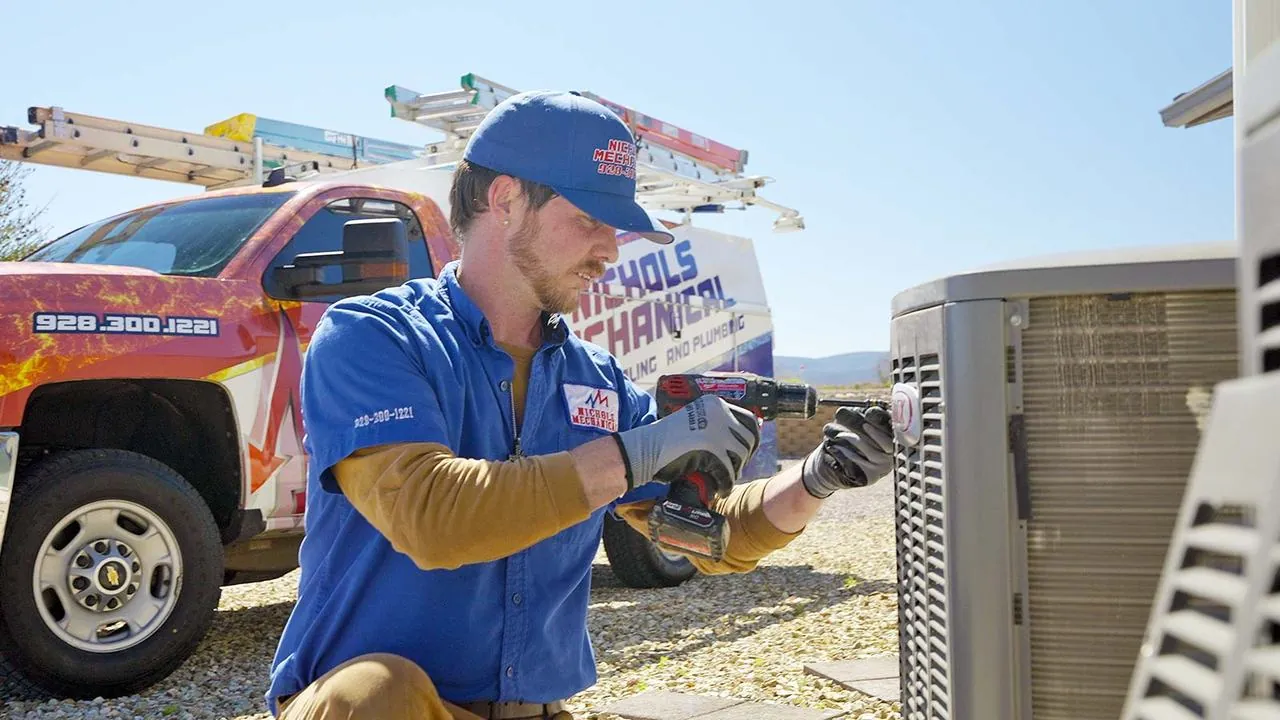
Nichols Plumbing, Electrical, & HVAC is a family-owned, triple-licensed contractor based in Cottonwood, serving Prescott, Prescott Valley, the Verde Valley, and Sedona. We service and install both heat pumps and gas furnaces, which means we have no reason to steer you toward one over the other.
The part that matters most is the load calculation. Sizing a heat pump for a Prescott winter is a different exercise from sizing a furnace, and getting it wrong produces exactly the disappointing results that give heat pumps a poor reputation in cold climates. We look at your home, your ductwork, your fuel availability, and your electrical service before recommending anything.
We also handle furnace and heat pump repair and heating maintenance and tune-ups, plus air conditioning service across the Prescott area including AC repair and AC installation. You can see everything we offer locally on our Prescott service page, and our maintenance plans keep either system on a schedule. Every job is backed by our 100% satisfaction guarantee, and we offer a free second opinion if you already have a quote.
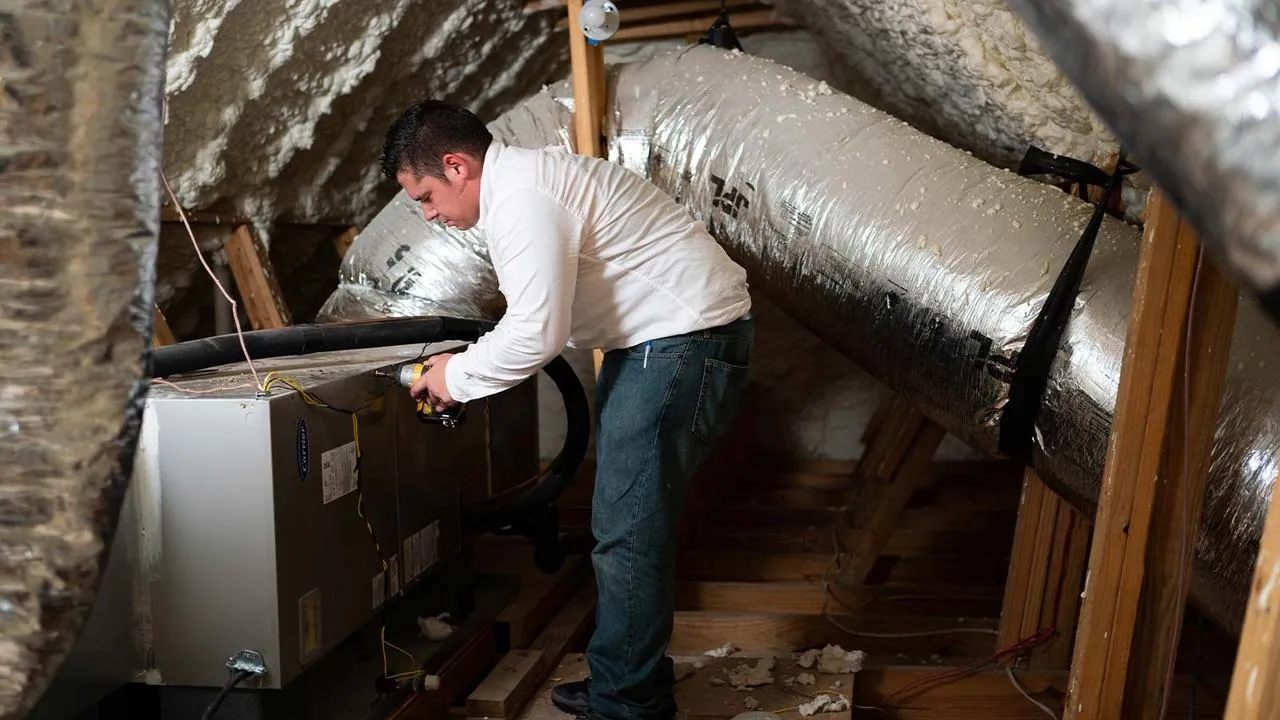
The short version: a modern cold-climate heat pump works in Prescott and covers cooling too. A gas furnace still wins on deep-cold consistency if you already have gas. Dual fuel splits the difference and fits this climate better than either alone, if the budget allows it.
Deciding Before Winter Sets In?
Nichols will run the load calculation, check your fuel and electrical service, and put a heat pump, furnace, and dual fuel option side by side so you can compare them properly.
Request Service Online