When a water heater fails, most people want one number and want it quickly. The frustrating truth is that a responsible contractor cannot give you a real number until they know what they are walking into, because water heater replacement is not one job. It is somewhere between a two-hour swap and a full-day project involving venting, gas work, and code upgrades.
This guide breaks down every factor that moves the price, explains which of them are common in Cottonwood and the wider Verde Valley, and gives you a way to compare quotes so you are actually comparing the same scope of work. For current offers, our coupons page is the place to check.
Why There Is No Single Price
A water heater quote covers three separate things: the unit itself, the labor to install it, and whatever else has to change so the installation is safe and code compliant. The first is the part people focus on and the one that varies least. The third is where quotes diverge, and it is invisible until somebody actually looks at your setup.
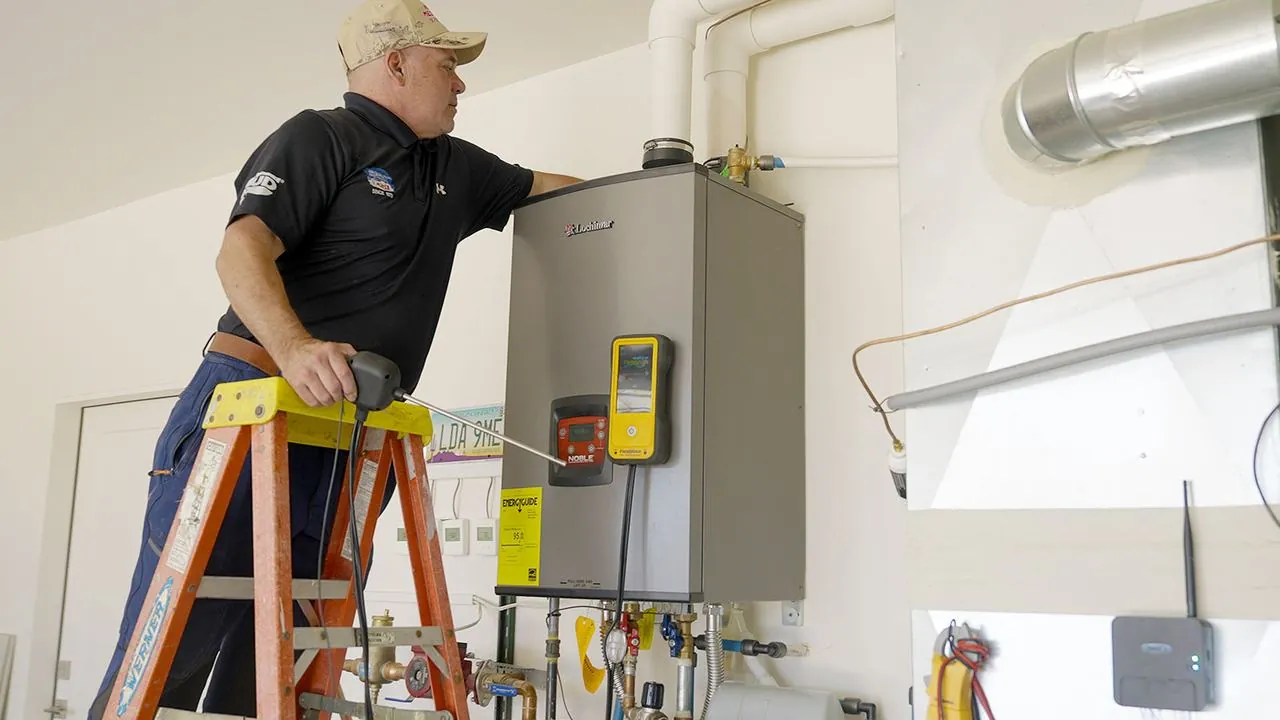
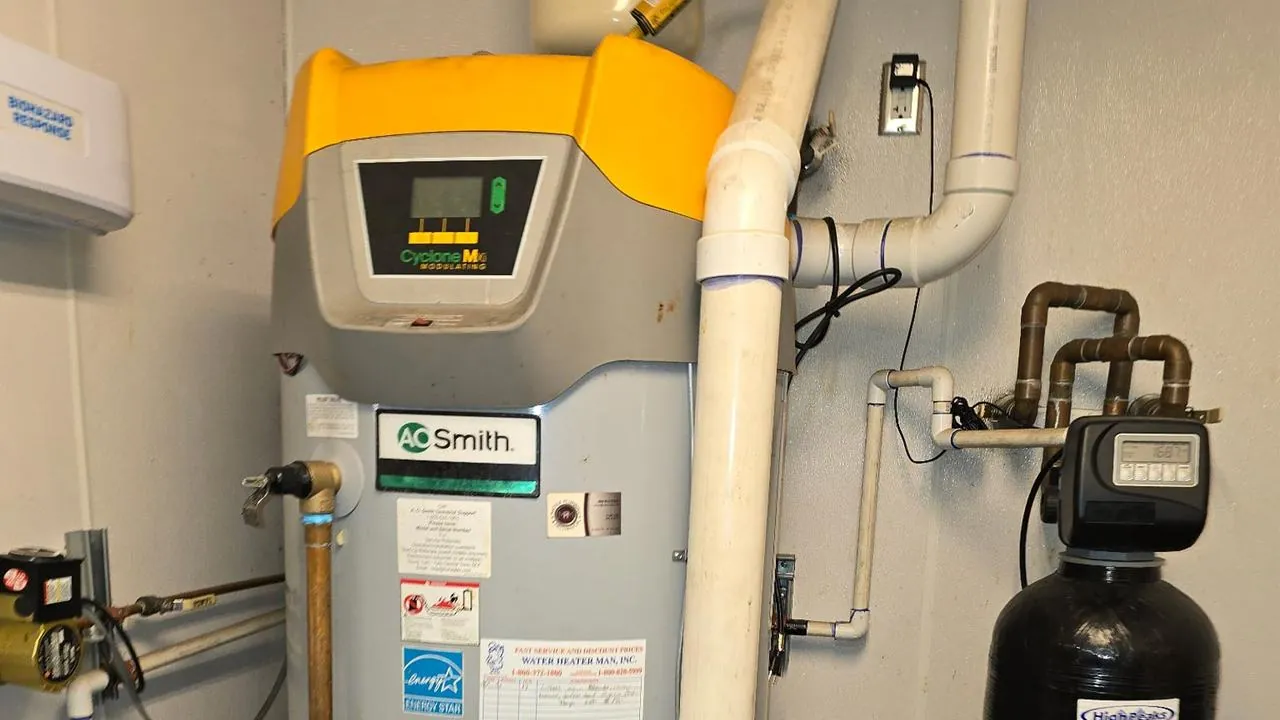
Consider two examples. A gas tank heater in an open garage, replaced with the same type and capacity, with venting and connections already in good shape, is close to the simplest version of this job. Now take an electric heater in a second-floor interior closet that the homeowner wants converted to gas tankless. That second job needs a new gas line, a new vent path, electrical changes, drainage provisions, and considerably more labor. Same category of appliance, entirely different project.
The Factors That Set the Cost
Here is the full list, roughly in order of how much each one typically moves the total.
| Factor | What it changes |
|---|---|
| Type of unit | Standard tank, high-efficiency tank, heat pump water heater, or tankless. This is the single largest variable. |
| Capacity or output | Larger tanks and higher-output tankless units cost more, and a bigger unit sometimes needs a bigger gas line. |
| Fuel source | Gas, electric, or propane. Switching fuel type adds gas piping or electrical work to the scope. |
| Installation location | Open garage access is easiest. Attics, crawlspaces, tight closets, and upper floors all add labor and often add drainage requirements. |
| Venting | Reusing existing venting is inexpensive. New or reconfigured venting, especially for high-efficiency and tankless units, is not. |
| Code upgrades | Expansion tank, strapping, drain pan and drain line, relief valve discharge routing, and shutoff valves may need to be added or corrected. |
| Permit and inspection | Required in most jurisdictions and priced into a legitimate quote. |
| Removal and disposal | Hauling away the old unit is standard but should be stated rather than assumed. |
| Timing | Emergency and after-hours work is priced differently from scheduled replacement. |
| Water treatment | Optional, but adding pre-treatment in a hard-water home changes both the quote and the lifespan of the new unit. |
The one to watch: code upgrades. They are the most common source of a quote coming in above what a homeowner expected, and they are also the least negotiable, because they are what makes the installation legal and safe.
Tank vs. Tankless Cost Profile
These two options have different shapes, not just different totals. A tank heater costs less to install and typically has a shorter service life. A tankless unit costs more to install, often needs supporting work, and typically lasts considerably longer while using no energy holding water hot between draws.
- Like-for-like tank replacement is the lowest-cost path and the fastest to complete.
- Upgrading tank capacity is a modest step up, though a larger unit may not fit the existing space.
- Tank to tankless conversion is the largest jump, because of venting, gas sizing, and mounting.
- Heat pump water heaters sit in between, with their own space, drainage, and ambient-air requirements.
- Fuel conversion in either direction adds a trade to the job, which is reflected in the quote.
If you are weighing the two on long-run value rather than install cost alone, our comparison of tankless versus tank water heaters works through the trade-offs, and getting the tankless sizing right matters just as much as the choice itself.
Cottonwood-Specific Cost Drivers
A few local conditions show up repeatedly in Verde Valley quotes.
Hard water and equipment life
Local groundwater carries a meaningful mineral load. In a tank, those minerals settle out as sediment and insulate the burner or element. In a tankless unit, they scale the heat exchanger. Either way, the effect is a heater that works harder and ages faster. Our overview of hard water in the Verde Valley explains the mechanism, and it is why pre-treatment sometimes belongs in the same conversation as replacement.
Older homes and outdated setups
Plenty of homes across Cottonwood, Clarkdale, and the surrounding communities have water heaters installed decades ago under different code requirements. Replacement is often when expansion control, relief valve routing, or strapping gets brought current for the first time. That is not a contractor padding the quote. It is the cost of the installation being legal.
Placement
Garage installations are common here and are the easiest to service. Interior closets and attic placements are harder to access, frequently require a pan and a drain line, and take longer to complete.
Emergency versus planned replacement
A heater that fails on a Sunday costs more to deal with than one replaced on a scheduled weekday. If yours is showing warning signs, acting early is the cheapest decision available to you.
Repair or Replace?
Replacement is not automatically the answer. The decision usually comes down to age, the nature of the failure, and whether the unit has already needed significant work.
| Usually worth repairing | Usually worth replacing |
|---|---|
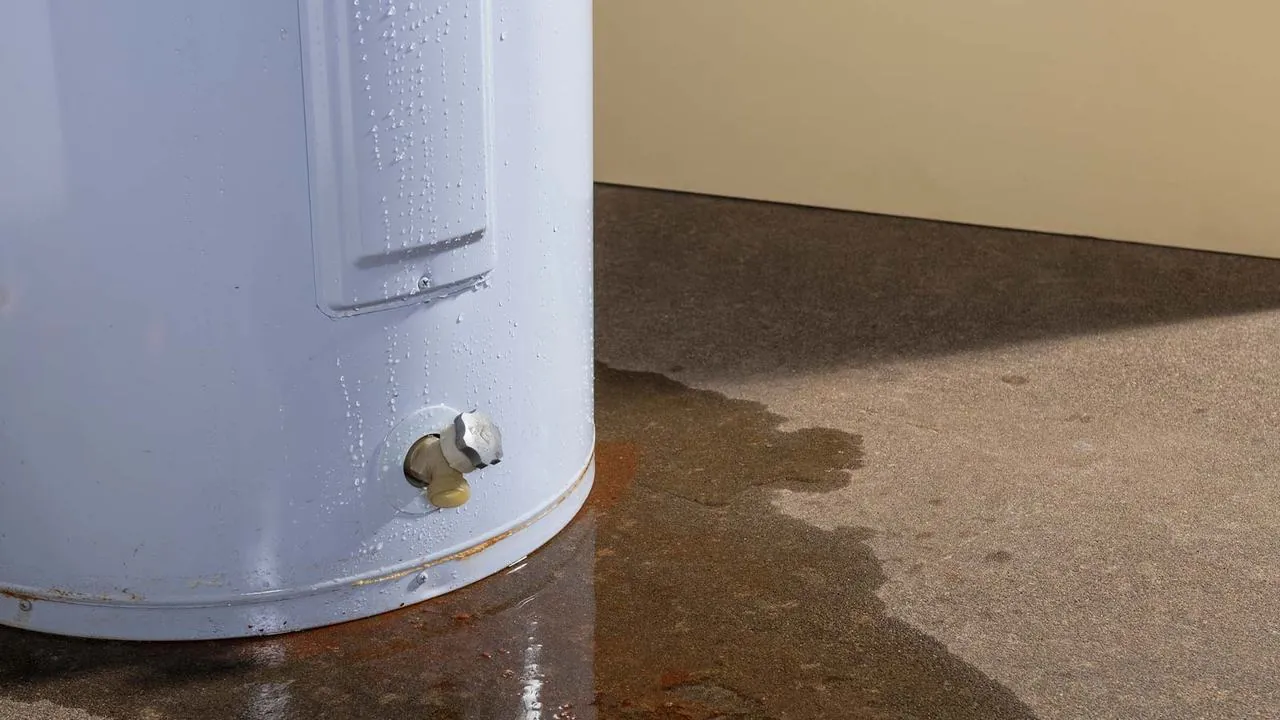
| Failed thermostat or heating element on a newer unit | Any tank leaking from the tank body |
| Faulty relief valve or a bad thermocouple | A unit at or past its typical service life |
| Pilot or ignition issues on a mid-life heater | Repeated repairs within a short window |
| Loose or corroded fittings and connections | Significant internal corrosion or heavy sediment |
| A unit needing its first flush in years | A heater that no longer meets household demand |
If your heater is leaking right now, the priority is water control rather than the repair-versus-replace decision. Our guide on water heater leaks and safe repair covers the diagnosis, and how to stop a water leak emergency covers the immediate steps.
Rule of thumb: if the unit is near the end of its expected life and the repair is a major component, replacement is usually the better use of the money. If it is young and the failed part is minor, repair it and get the flushing back on schedule.
How to Compare Quotes Fairly
A lower number is only a better deal if the scope matches. Ask every contractor the same questions and the comparison becomes straightforward.
- Is the permit included, and who pulls it?
- What code upgrades are in the quote, and which ones are listed as possible extras?
- Is removal and disposal of the old unit included?
- What exactly is the unit in terms of type, capacity or output, and efficiency?
- What warranty applies to the equipment, and separately to the labor?
- Are new shutoff valves, connectors, and an expansion tank included or billed separately?
- Is the price firm or subject to change once the old unit comes out?
If a quote you already have does not answer those questions, a free second opinion is a reasonable next step. We offer one, and it costs you nothing to have someone look at the same job and tell you what they see.
Ways to Keep the Cost Down
- Replace before it fails. Planned work is always less expensive than an emergency call.
- Keep the fuel type and location the same unless there is a real reason to change them.
- Maintain the new unit. Annual flushing and anode checks extend service life in hard water and delay the next replacement entirely.
- Check current offers. Our coupons page lists what is available at any given time.
- Address hard water once. Pre-treatment protects every water-using appliance, not just the heater.
- Bundle related work. If other plumbing repairs are pending, doing them in one visit avoids a second trip charge.
How Nichols Can Help
Nichols Plumbing, Electrical, & HVAC is a family-owned, triple-licensed contractor based in Cottonwood at 4140 Western Dr, serving the Verde Valley, Prescott, Sedona, and Camp Verde areas. Our water heater service covers repair, replacement, and tankless installation across all major brands, including Rheem, A.O. Smith, and Bradford White.
We evaluate your setup in person before quoting, because the code upgrades and venting requirements that move the price are only visible on site. You get a written estimate with the scope spelled out, so you know what is included rather than discovering it later. Every job is backed by our 100% satisfaction guarantee, and we offer a free second opinion if you already have a quote from someone else.
If your existing heater still has life in it, our maintenance plans keep the annual flush on schedule, which is the most effective way to postpone this expense. You can see our full range of plumbing services, reach our team, or read more about our family-owned company.
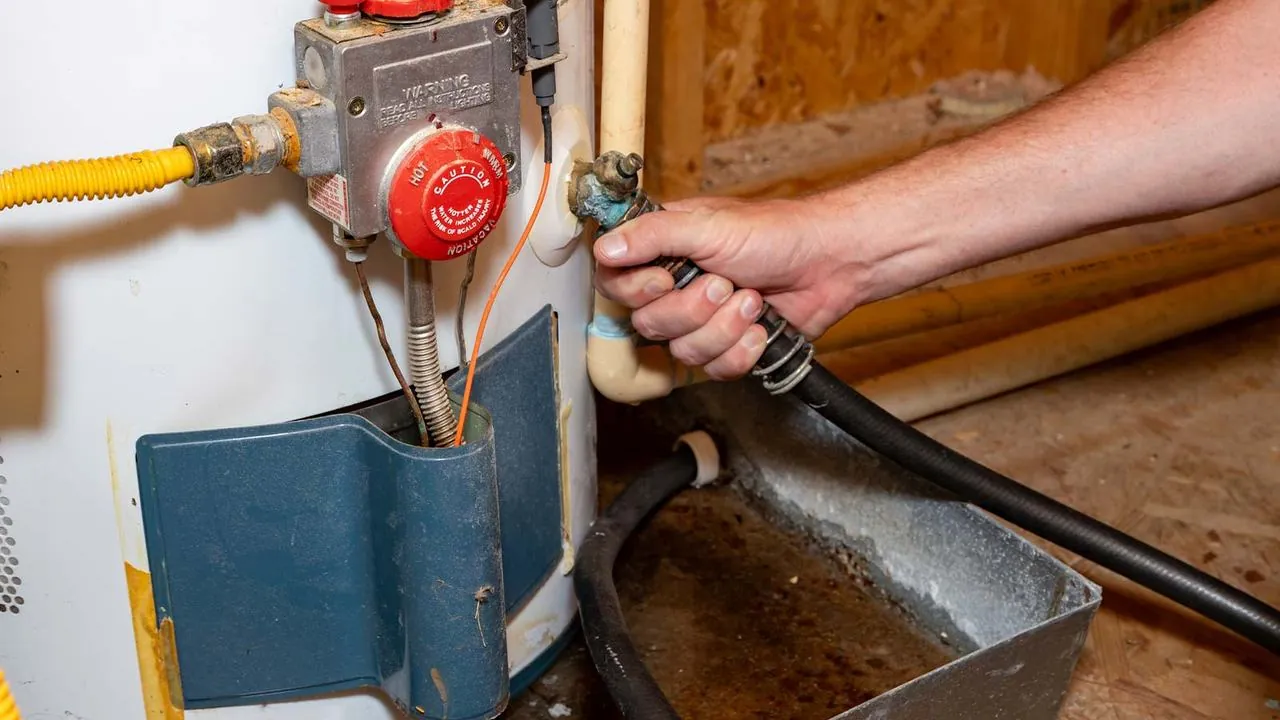
The short version: the unit is the predictable part of the cost. Venting, code upgrades, access, and fuel type are what actually separate one quote from another, so compare scope before you compare totals.
Want a Real Number for Your Home?
Nichols will look at your setup, spell out the scope in writing, and tell you exactly what is driving the quote. Free second opinions if you already have an estimate.
Request Service Online