Most homeowners ask the wrong question when a water heater fails. They ask "how much does it cost?" when the better question is "which system costs me less over the next 20 years?" For Cottonwood and Verde Valley homeowners, those two questions have very different answers — and the gap between them is shaped by Arizona's hard water, summer heat, and how long you plan to stay in the house.
Nichols Plumbing, Electrical, & HVAC installs and services both tank and tankless water heaters throughout the Verde Valley. This guide lays out the real numbers so you can make the call that's right for your home — not just the one that's cheapest on day one. See our water heater service page for installation and replacement options.
Upfront Costs: What to Expect
The biggest sticker shock with tankless systems is the installation cost — and it's real. A traditional tank water heater is a relatively straightforward swap. A tankless installation often involves more than just swapping hardware.
Tank Water Heaters
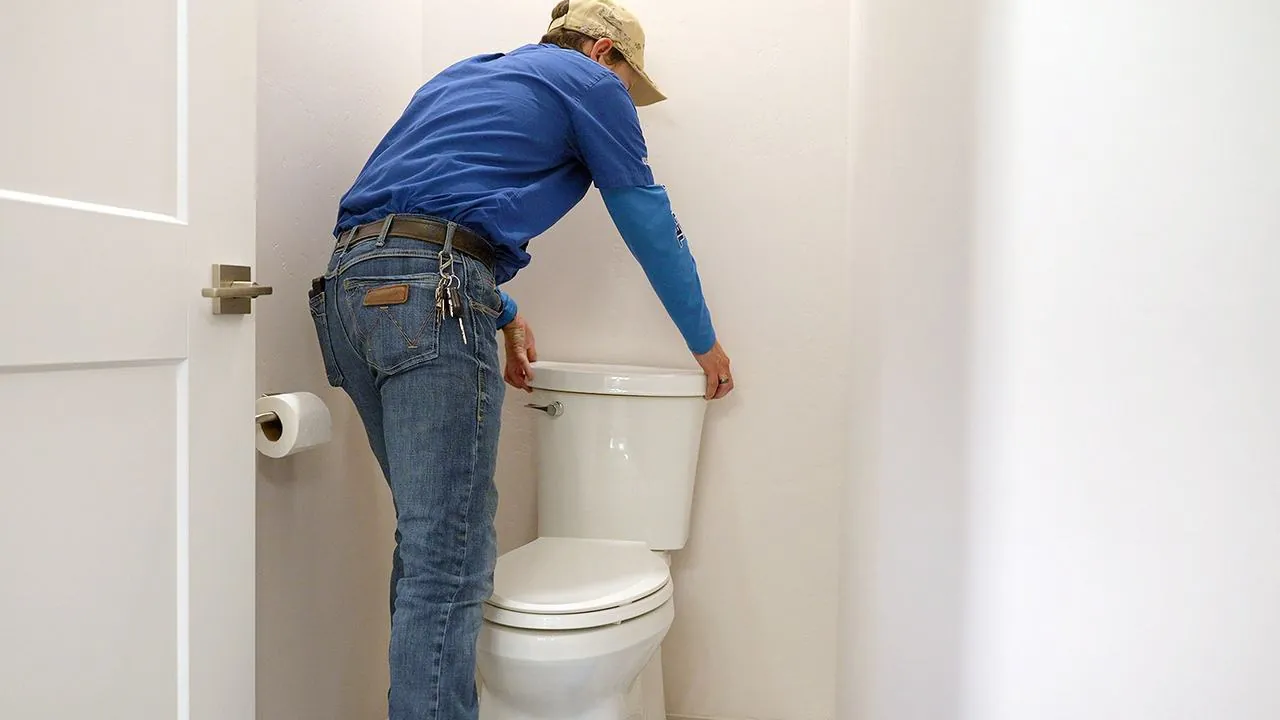
A standard tank replacement involves pulling the old unit, setting the new one, and reconnecting existing supply lines and venting. For most Cottonwood homes, this is a one-visit job. Equipment ranges from basic 40-gallon units to higher-capacity models — see the water heater page for current options.
Tankless Water Heaters
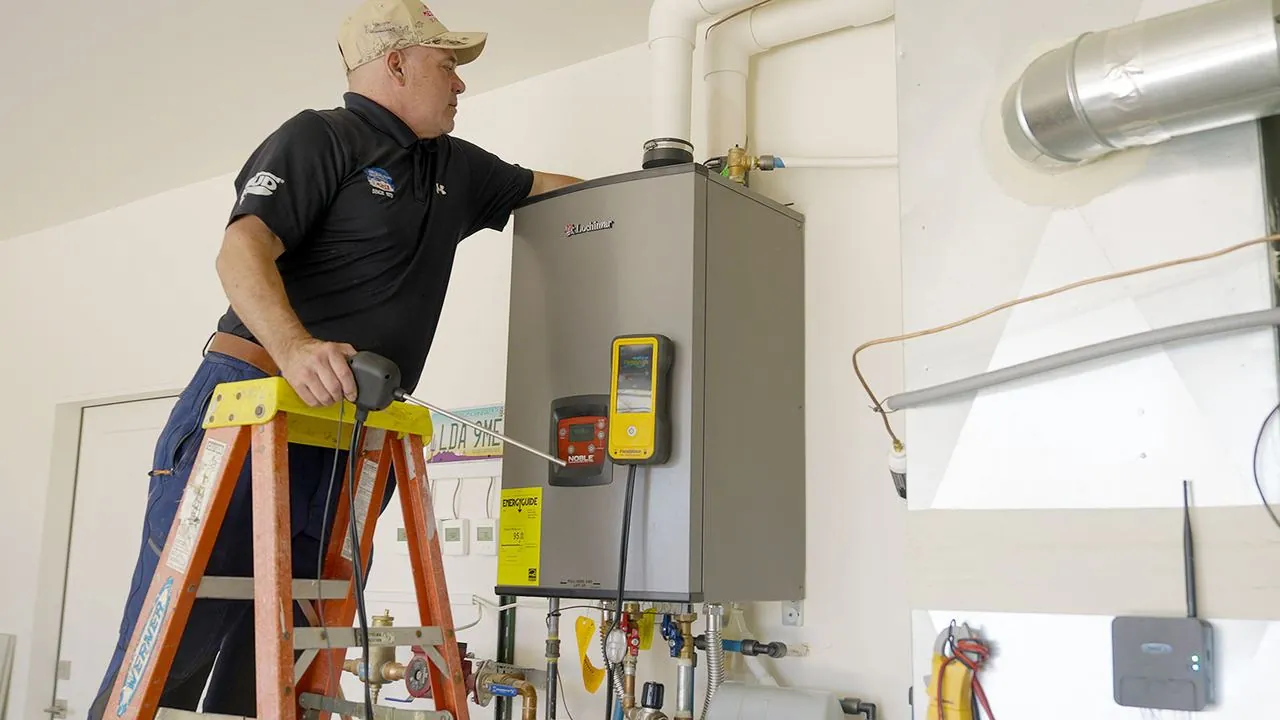
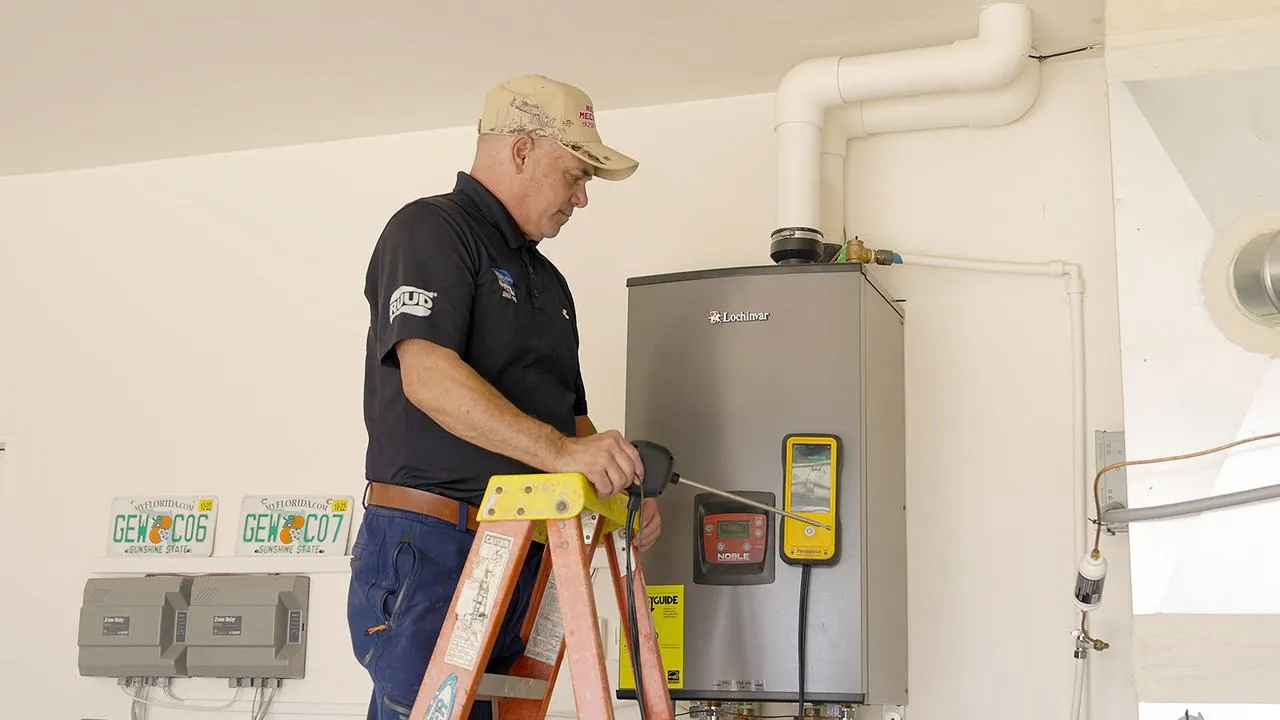
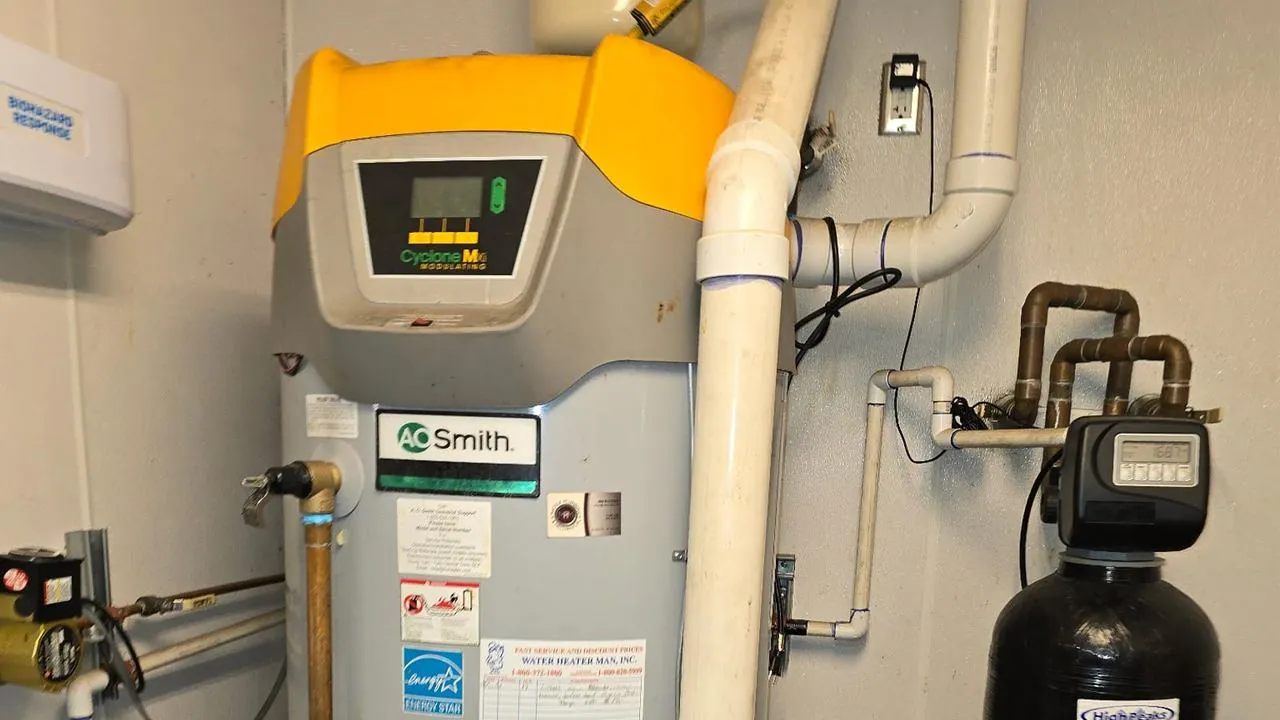
Tankless installations routinely involve more prep work. Gas tankless units demand higher gas flow rates than most tank units, which often means upgrading the gas line from the meter to the appliance. Code-compliant venting is a separate requirement. Electric tankless units may require an electrical panel upgrade to handle increased amperage demands. Permits are required in Arizona and add to both time and cost.
None of that is a reason to avoid tankless — it's just the honest picture of what's involved. For an accurate assessment of what your specific home needs, Nichols evaluates your existing gas line, electrical panel, and venting before installation begins.
- Lower upfront cost
- Simple installation
- Works with existing lines
- 8–12 year lifespan
- Standby heat loss 24/7
- Can run out of hot water
- 15–25+ year lifespan
- No standby heat loss
- Unlimited hot water
- Higher upfront cost
- May need gas/elec upgrades
- Annual descaling required in AZ
Lifespan: Where the Gap Really Adds Up
Lifespan is where the tankless math starts to work in its favor. Over a 20-year period, you'll likely replace a tank water heater twice. A tankless unit, properly maintained, may never need replacement during that window.
Why Tank Systems Wear Out Faster
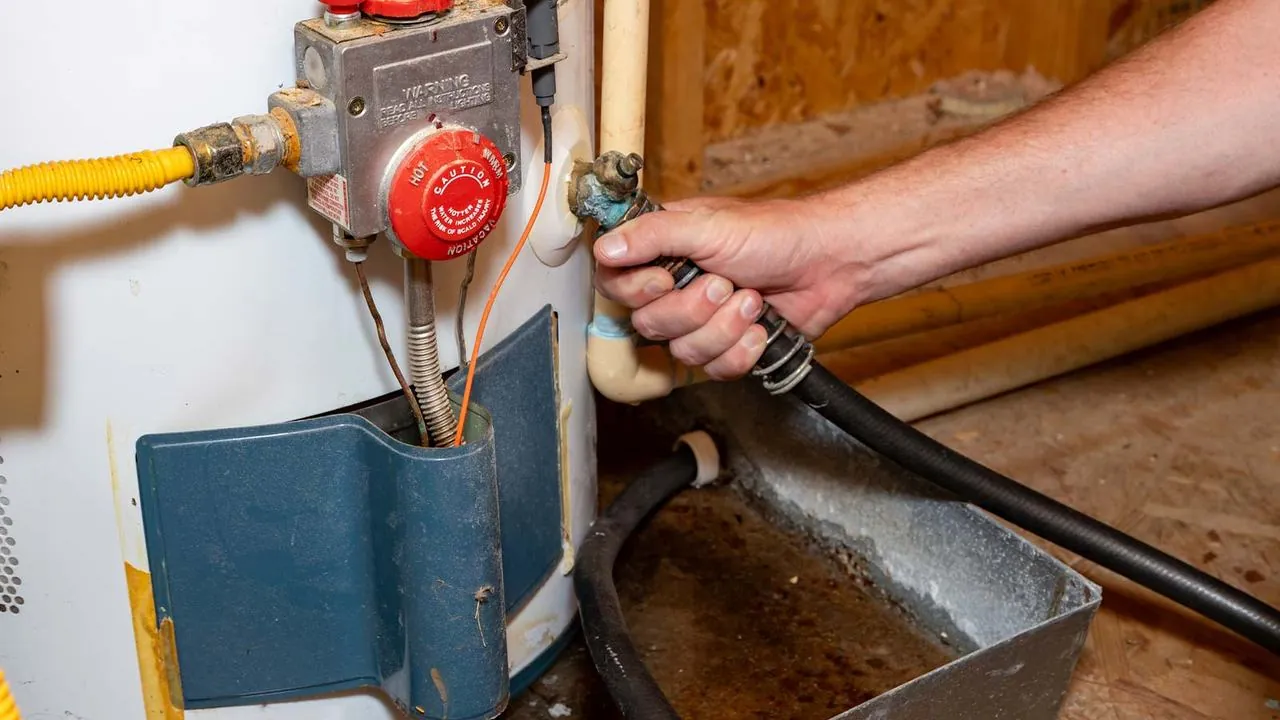
A tank water heater holds 40 to 80 gallons of water at all times — constantly heating, reheating, and sitting in contact with the mineral-heavy water that comes out of Verde Valley taps. Sediment settles at the bottom of the tank and gradually corrodes the lining. Anode rods slow this process but don't stop it. The constant thermal cycling, combined with Arizona's hard water, tends to push tank systems toward the lower end of their rated lifespan rather than the upper end.
Why Tankless Units Last Longer
Tankless units don't store water. When no hot water is being used, there's no water sitting in the heat exchanger. That eliminates the continuous corrosion that shortens tank lifespans. The tradeoff is that when water does flow through, mineral deposits accumulate on the heat exchanger surfaces — which is why annual descaling matters so much in Arizona.
Replacement math: Over 20 years, a tank system requires two full replacements — equipment plus labor, twice. A well-maintained tankless unit covers the same period with no replacement. That second purchase is a significant cost that often gets overlooked when comparing initial install prices side by side.
Arizona Hard Water: The Hidden Variable
Hard water is the most important local factor in this decision — and it cuts differently for each system type. The Verde Valley's water typically falls in the moderately hard to hard range. That's enough to shorten equipment life meaningfully without treatment.
How Hard Water Affects Tank Systems
Sediment from mineral-heavy water settles at the bottom of storage tanks and insulates the heating element from the water above it. The heater runs longer and hotter to compensate, which accelerates wear on the tank lining, anode rod, and heating element. Annual flushing helps, but hard water sediment is a slow, consistent drain on tank lifespan. This is the same scale buildup discussed in our guide to hard water in the Verde Valley.
How Hard Water Affects Tankless Systems
Tankless units are more sensitive to hard water than tanks, not less. Calcium and magnesium deposits build up directly on the heat exchanger — the most critical and expensive component in the system. Without annual descaling, a tankless unit rated for 20+ years can fail in 7 to 10 years. That's not a theoretical risk in Cottonwood; it's the predictable outcome when maintenance is skipped.
- Scale on the heat exchanger reduces efficiency and increases gas or electricity consumption
- Unchecked buildup can cause the unit to overheat and trigger automatic shutoff
- Severe scaling can permanently damage the heat exchanger — often voiding the warranty
- Most tankless warranties require documented annual maintenance to remain valid
The Solution: Annual Descaling + Water Softening
Annual professional descaling is non-negotiable for Verde Valley tankless owners. A water softener, while an additional investment, protects both the tankless unit and other plumbing and appliances throughout the house. Together they allow a tankless system to reach its full 20-plus-year lifespan potential. Nichols handles water heater maintenance for both tank and tankless systems across the Verde Valley.
Energy Efficiency and Monthly Savings
This is the other side of the long-term math. Tankless systems use less energy — not because of any single dramatic factor, but because they eliminate standby heat loss entirely.
Understanding UEF Ratings
UEF (Uniform Energy Factor) is the standardized measure of water heater efficiency — essentially, how much of the energy going in actually ends up as hot water coming out. Higher is better.
Tank Water Heaters
UEF ratings typically fall between 0.58 and 0.65. Much of the lost energy goes to keeping the stored water hot even when nobody is using it — what the industry calls standby heat loss.
Tankless Water Heaters
UEF ratings range from 0.82 to 0.99. Gas condensing units reach the upper end of that range. Electric tankless models can hit 0.91 to 0.99. The standby loss problem is eliminated entirely — energy is only consumed when hot water is demanded.
Real-World Efficiency Gains
The efficiency advantage varies with household usage, according to the U.S. Department of Energy. Lower-usage households see a larger percentage gain because standby loss represents a bigger share of their total energy consumption:
- Households using 41 gallons or less per day: 24–34% more efficient with tankless
- Households using around 86 gallons per day: 8–14% more efficient with tankless
Calculating Your ROI
The honest answer is that tankless doesn't pencil out for every homeowner — and that's fine. The ROI depends on three variables: how long you stay in the house, your fuel type, and whether your home needs infrastructure upgrades.
Payback Period Ranges
Payback periods for tankless systems vary widely depending on the situation. The wide range exists because the upfront cost gap between tank and tankless can be narrow or substantial depending on what your home needs:
Electric Tankless
No gas line work required, but may need a panel upgrade for the increased electrical load. Annual savings are more modest than gas.
Gas Tankless
Payback takes longer when gas line work is needed. However, energy savings are higher annually, and the 20-year total cost picture often favors tankless once you account for tank replacements.
Total 20-Year Cost of Ownership
When you factor in two tank replacements, annual maintenance costs, and operating costs over two decades, the numbers converge more than the initial price gap suggests. Tank systems cost more over the long run than the upfront difference implies.
The 10-to-15-year rule: If you plan to stay in your Cottonwood or Prescott-area home for at least 10 to 15 years, tankless is worth serious consideration. If you expect to sell within 5 to 7 years, a well-maintained tank system may be the more practical call. Nichols can help you assess your specific situation — see water heater options here.
Side-by-Side Comparison
| Factor | Tank Water Heater | Tankless Water Heater |
|---|---|---|
| Upfront Installed Cost | Lower | Higher — may include gas line, venting, or panel work |
| Lifespan | 8–12 years | 15–25+ years (up to 30 with maintenance) |
| Lifespan (hard water, untreated) | 8–12 years | 7–10 years — descaling is essential in AZ |
| UEF Efficiency Rating | 0.58–0.65 | 0.82–0.99 |
| Standby Heat Loss | Yes — continuous, 24/7 | None — heats on demand only |
| Annual Energy Savings vs. Tank | Baseline | Lower energy use — no standby loss |
| Annual Maintenance | Lower — annual flush and anode rod check | Higher — annual professional descaling required in AZ |
| 20-Year Replacements Needed | Typically 2 | Typically 0 |
| Hot Water Supply | Limited by tank capacity | Continuous — no running out |
| Best For | Shorter stays, tighter upfront budgets, straightforward replacements | Homeowners staying 10+ years who want lower long-term operating costs |
Which One Is Right for You
There's no universal answer here — and anyone who tells you otherwise isn't thinking about your specific home. The decision comes down to a few concrete questions.
Tank Is Probably the Right Call If…
You're planning to sell within 5 to 7 years. You need a fast replacement without infrastructure work. Your budget requires keeping upfront costs low. A straightforward replacement through Nichols water heater service gets you back up and running quickly.
Tankless Is Worth the Investment If…
You plan to stay in your Cottonwood home for 10+ years. You want lower monthly operating costs long-term. You're willing to commit to annual descaling maintenance — which is non-negotiable in the Verde Valley.
Getting a Straight Answer for Your Home
The ROI calculation changes significantly based on whether your home needs gas line work, an electrical panel upgrade, or just a straightforward swap. Nichols Plumbing, Electrical, & HVAC assesses your home's actual infrastructure before recommending a system — so you're not making a decision based on national averages that may not apply to your house in Cottonwood, Sedona, Prescott, or Camp Verde.
Nichols also handles the surrounding plumbing work — including plumbing repairs and maintenance plans that help protect your water heater investment over the long haul. If hard water is a factor in your decision (it should be), our guide to hard water in the Verde Valley covers water softening options that protect both tank and tankless systems.
Not Sure Which Water Heater Is Right for Your Home?
Nichols Plumbing, Electrical, & HVAC installs and services both tank and tankless systems throughout Cottonwood and the Verde Valley. Get a straight answer based on your home's actual infrastructure — not national averages.
Request Service Online