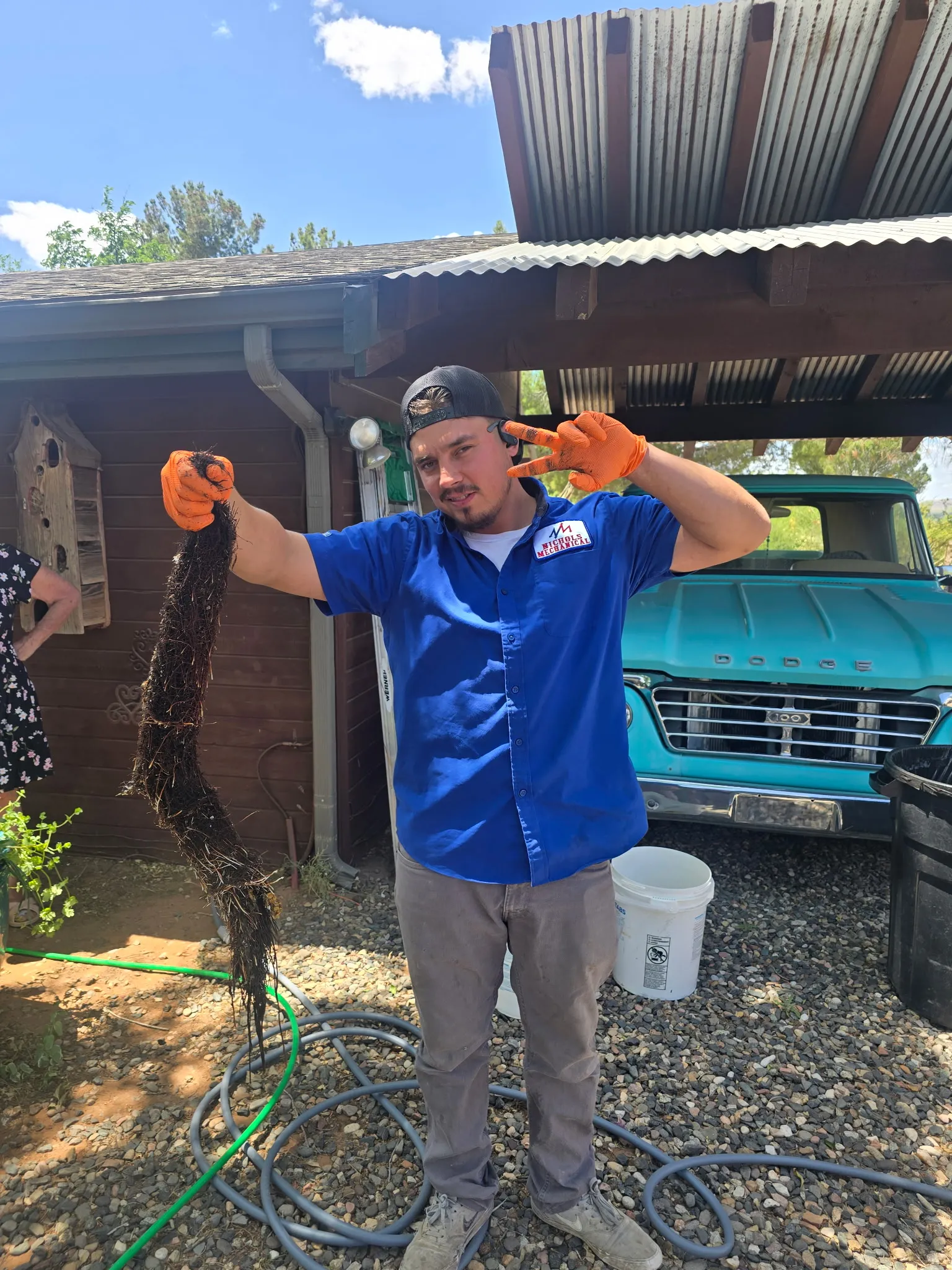
A main sewer line clog shows up in more than one place. Several drains slow down at once, the lowest tub or shower backs up first, toilets gurgle when the washer drains, or water comes up in the tub when you flush. One slow sink on its own is almost always a clog in that sink's drain, not the main line.
Here's how to tell which one you have, what to do right away, and how the line gets cleared.
One drain or the main line?
Every drain in your house feeds into one main sewer line that carries everything out to the city sewer or your septic tank. A clog in a branch line only affects the fixtures on that branch. A clog in the main line backs up everything upstream of it, and water comes out at the lowest opening it can find.
| What you notice | Most likely |
|---|---|
| One sink, tub or toilet slow, everything else fine | Clog in that fixture's drain |
| Two fixtures in the same bathroom slow | Clog in that bathroom's branch line |
| Drains slow all over the house | Main sewer line |
| Toilet gurgles when the washer drains | Main line partly blocked, or a blocked vent |
| Water comes up in the tub when you flush | Main sewer line |
| Water or sewage at the outdoor cleanout | Main line blocked past the cleanout |
Signs of a main sewer line clog
- Several drains slow at once, in different rooms
- The lowest drain backs up first. Usually a ground-floor shower, tub or floor drain
- Toilets gurgle or bubble when a sink, tub or the washer drains
- Water rises in the tub or shower when you flush a toilet
- Sewage smell from drains or outside near the cleanout
- The washer overflows or backs up into a nearby drain during the drain cycle
- Clogs keep coming back soon after a drain was cleared
Why the toilet gurgles when the washing machine drains
A washer dumps a lot of water fast. If the main line is partly blocked, that water can't get past the clog quickly, so it pushes air back up through the nearest openings. The toilet's water seal is often the easiest way out, and you hear it gurgle. A blocked roof vent can cause the same sound, but if other drains are slow too, the main line is the more likely cause.
Check the cleanout
Most homes have a sewer cleanout: a capped pipe, usually 3 or 4 inches wide, that sticks up from the ground near the foundation or along the line to the street. It gives a plumber straight access to the main line.
If you can find it, look at the cap. Water or sewage seeping around it means the clog is past that point, between the cleanout and the street or septic tank. If you open it, loosen the cap slowly and stand to the side, because water backed up behind it can push out. Standing water inside points to a clog further down the line. A dry cleanout points back toward the house.
What clogs a main sewer line
- Tree roots grow into small cracks and loose joints, then catch everything that comes through. See our post on roots in underground pipes
- Grease and food poured down the kitchen sink harden in the line
- Wipes and paper towels, including wipes labeled flushable
- A sag (belly) in the pipe, where waste settles and builds up
- Old or damaged pipe that has cracked, shifted or collapsed
What to do right now
- Stop using water: no laundry, dishwasher, showers or flushing until it's cleared
- Don't keep plunging a toilet that's backing up into the tub. You'll push more water into the line
- Skip chemical drain cleaners. They won't reach a main line clog and can leave caustic water sitting in the pipes for whoever clears it
- If sewage is coming into the house, keep people and pets away from it and call right away
How a main sewer line gets cleared
A plumber clears a main line from the cleanout with a cable machine, often called a snake, or with a hydro jetter that scours the pipe with high-pressure water. A snake opens a path through the clog. Jetting cleans grease, sludge and fine roots off the pipe walls. Our post on hydro jetting vs. snaking explains when each one fits.
If clogs keep coming back, a camera run down the line shows why, whether it's roots, a sag or a broken section. Our drain cleaning techs clear clogged lines. See our hydro jetting and sewer camera page for how jetting and a camera inspection work.
Who owns the sewer line in Prescott
If you're on city sewer in Prescott, the City of Prescott says a property owner's private sewer line extends from the home's foundation and includes its connection to the city sewer main. That means clearing or repairing it is the owner's job, not the city's.
What we hear on calls
Main line calls usually start with a clear message: "There's a clog in the main line." Another homeowner told us, "It appears that maybe my main line is backed up." Some people try a rental snake first. One caller said, "I've snaked the first four feet of it and can't get my snake to go any further."
Others call because clogs keep coming back, or ask us to "Hydro jet main sewer" after a toilet clog. Some just need help finding where their main line runs.
We serve Prescott from our Prescott Valley shop. See plumbing in Prescott.
Questions
Drains backing up all over the house?
Call the Nichols crew to get your main line cleared.
Licensed, bonded and insured · 24/7 emergency service