If you own a home in Sedona, Cottonwood, or anywhere else in the Verde Valley, slab leaks are a real risk — not a hypothetical one. Arizona's hard water builds up inside pipes. The desert soil expands and contracts. Summer highs reach the upper 90s and can top 100°F. All of that combines to put serious stress on the plumbing buried beneath your foundation.
The problem is that these leaks are invisible. By the time you notice something is wrong, damage may already be spreading. This guide explains what slab leaks are, what causes them here specifically, and how Nichols Plumbing, Electrical, & HVAC locates and repairs them — most of the time without tearing up your floor. For anything related to your home's plumbing, Nichols serves the entire Verde Valley.
What a Slab Leak Is
A slab leak is a leak in water or sewer pipes located beneath — or embedded within — the concrete foundation your home sits on. Both freshwater supply lines and drain lines can develop slab leaks. The challenge isn't fixing the pipe; it's finding it. Concrete hides everything.
Slab leaks range from a slow seep that wastes water invisibly for months to an active break that saturates soil and undermines the foundation quickly. Either way, the damage compounds the longer the leak goes unaddressed. That's what makes early detection so valuable.
Worth knowing: Most Arizona homes are built on concrete slab foundations rather than raised foundations with crawl spaces. That means there's no accessible gap between the floor and the ground — plumbing runs directly through or beneath solid concrete.
Why Arizona Conditions Accelerate Slab Leaks
Slab leaks happen everywhere, but Arizona homeowners face a convergence of conditions that accelerate pipe deterioration in ways that homeowners in other states don't deal with to the same degree.
Hard Water Mineral Buildup
The Verde Valley and Prescott area has hard water — averaging 4.3 to 7.6 grains per gallon. That mineral load doesn't just leave deposits on faucets and showerheads. Inside your pipes, calcium and magnesium build up over years, and water chemistry can gradually corrode copper plumbing from the inside out.
Older homes with original copper supply lines are particularly vulnerable. If you've noticed hard water effects around your fixtures, the same mineral activity is occurring in pipes you can't see. For a full picture of how hard water affects Verde Valley plumbing, see our guide to hard water in the Verde Valley.
Expansive Desert Soil
Arizona soil — particularly clay-rich soil — expands significantly when it absorbs moisture and contracts when it dries out. Monsoon season brings intense rainfall in July and August, saturating ground that may have been bone-dry for months. That cycle of expansion and contraction shifts the soil beneath foundations, placing stress on underground pipe joints and connections. Even small ground movements repeated over years are enough to crack or separate plumbing buried beneath a slab.
Extreme Temperature Swings
Cottonwood summers reach the upper 90s and can top 100°F, mostly June to August. Pipe materials expand when hot and contract when cool. Years of that thermal cycling weakens metal at joints and bends. When combined with hard water corrosion and soil movement, the combined wear on under-slab plumbing adds up faster than most homeowners realize.
Installation and Pressure Factors
Pipes installed under improper tension or at incorrect angles are more susceptible to stress fractures over time. Excessively high water pressure — common in some Verde Valley areas — also accelerates wear on underground plumbing and increases the risk of leaks developing at fittings and joints beneath the slab.
Warning Signs to Watch For
Slab leaks rarely announce themselves. Most homeowners notice one or two small things that seem unrelated — until they have a plumber in to investigate. These are the most common indicators:
- Unexplained increase in your water bill with no change in usage
- Sound of running water when every faucet and fixture in the house is off
- Warm or unusually cold spots on the floor — often the first thing people notice
- Damp, warped, or buckled flooring in areas with no visible plumbing above
- Sudden or gradual drop in water pressure throughout the home
- Musty odor coming from floors or walls — the smell of persistent hidden moisture
- Water pooling near the home's exterior foundation or inside at the base of walls
- New cracks in walls, floor tile, or the foundation itself
- Hot water heater running constantly or cycling on more than usual
What Happens When You Wait
The damage from an undetected slab leak is not static. It builds. Water erodes the soil beneath the concrete slab, creating voids that cause uneven settling. As the foundation shifts, walls crack. Tile floors buckle. Doorframes go out of square. What started as a corroded pipe joint turns into a structural repair problem measured in tens of thousands of dollars.
Sustained moisture beneath and inside walls creates conditions for mold and mildew. Respiratory irritation, allergies, and ongoing remediation costs follow.
- Soil erosion beneath the slab compounds with every gallon that escapes
- Foundation repair costs increase significantly once structural settling begins
- Mold remediation adds a separate, significant expense if moisture persists
- Water bills continue rising until the leak is found and fixed
- Property value can be affected if slab leak history is disclosed during a sale
The math is straightforward: a professional inspection costs far less than the foundation repair, mold remediation, and flooring replacement that follow an ignored slab leak. The sooner a leak is found, the more contained the repair.
Detection Methods Nichols Uses
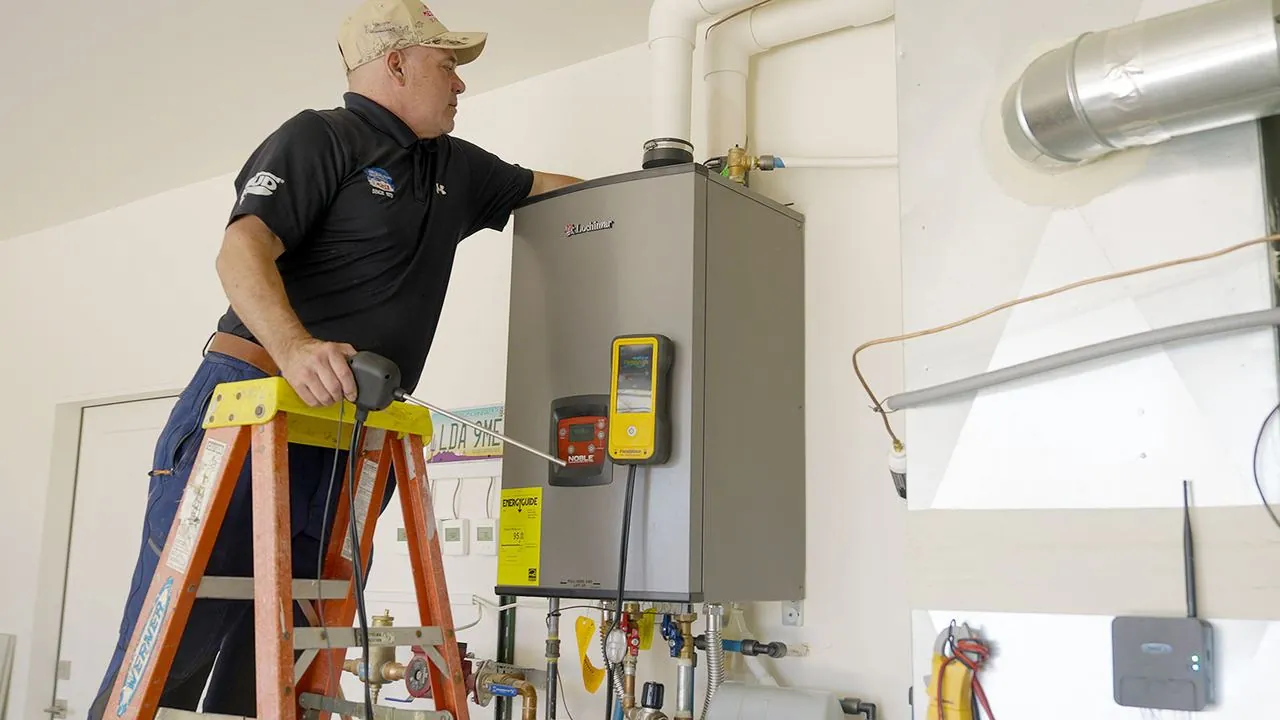
Finding a leak beneath a concrete slab used to mean breaking up the floor and hoping you got it right. Modern detection equipment changed that. Nichols Plumbing, Electrical, & HVAC uses a combination of non-invasive methods to pinpoint leaks accurately before any concrete is touched.
Electronic Acoustic Listening
Sensitive microphones and acoustic sensors amplify the distinctive sound water makes escaping under pressure through a crack or separation in the pipe. As the sensor moves closer to the leak, the sound intensifies — helping narrow the location to within inches. Pressurized supply lines produce a low, hollow vibration that trained technicians recognize immediately.
Infrared Thermal Imaging
Thermal cameras detect temperature differences caused by moisture in concrete and surrounding materials. A hot water leak shows as a warmer zone; cold water or evaporative cooling from any leak reads cooler. These temperature anomalies are invisible to the naked eye but show clearly on a thermal image — no drilling required.
Hydrostatic Pressure Testing
The plumbing system is filled with water and pressurized to a set level. Because water doesn't compress, any drop in pressure indicates a leak somewhere in the system. This method confirms whether a leak exists and helps isolate which section of plumbing is affected — fast and without any property disruption.
Ground Penetrating Radar
GPR uses electromagnetic waves to map conditions below the surface. When a pipe leaks, escaping water saturates soil and creates detectable voids or density changes. GPR produces a visual map of subsurface anomalies that complements acoustic findings and helps confirm the leak location before excavation begins.
Detection accuracy: Using acoustic, thermal, and pressure testing together is far more accurate than relying on a single method. That precision matters — it's the difference between a targeted, minimal repair and cutting open concrete in the wrong place.
Repair Options Available
Once the leak is located, the right repair method depends on where the leak is, how extensive the damage is, and the overall condition of your plumbing. Nichols discusses all options with you before any work begins.
| Repair Method | How It Works | Typical Timeline | Best For |
|---|---|---|---|
| Spot Repair | Concrete is opened directly above the leak; the damaged pipe section is replaced | 1 day | Single isolated leak in accessible location |
| Epoxy Coating | Sealant is applied from inside the pipe to close small leaks without excavation | Hours to 1 day | Minor leaks, minimal pipe damage |
| Pipe Rerouting | Damaged section is bypassed; new lines run through walls or attic instead | 2–3 days | Leaks in hard-to-reach areas; avoids slab entirely |
| Trenchless Epoxy Lining | Epoxy liner is installed inside existing pipe, creating a new inner pipe | Hours to 1 day | Minimal disruption; good for longer pipe sections |
| Complete Repiping | All plumbing is replaced with new lines; greatly reduces future slab leak risk | Several days | Older homes with widespread pipe deterioration |
For most repairs, you can remain in the home throughout the process. Nichols handles the detection, repair, and any required concrete restoration — you work with one crew from start to finish. For general plumbing repair services beyond slab work, the same team handles it all.
If Your Home Has Original Copper Plumbing
Homes built in the 1970s–1990s in the Verde Valley often still have original copper supply lines. Combined with decades of hard water mineral corrosion, these pipes are at elevated risk. If you've had one slab leak, it's worth discussing a full plumbing inspection to assess the rest of the system.
Drain Line Slab Leaks
Not all slab leaks involve supply lines. Sewer and drain pipes under the slab can also fail, often showing up as slow-draining fixtures, gurgling sounds, or sewage odors. Drain cleaning and camera inspection can help determine whether a drain line issue is above or below the slab.
Why Professional Detection Matters for Cottonwood and Sedona Homeowners
The instinct to investigate yourself is understandable — no one wants to wait or spend money they're not sure is necessary. But slab leak detection is one of the areas where DIY attempts almost always cost more than calling a professional from the start.
The Problem With Guesswork
Without detection equipment, a homeowner or even an inexperienced plumber has no reliable way to locate an under-slab leak. The visible symptom — a wet spot on the floor, a high water bill — tells you something is wrong, not where it is. Acting on guesswork means cutting into concrete in multiple locations, destroying flooring, and still potentially missing the leak. The exploratory demolition alone can exceed the cost of professional detection and a targeted repair.
The Process When You Call Nichols
Initial Inspection and Assessment
A technician inspects your foundation, walls, floors, and ceilings for visible signs of water intrusion or structural movement. You'll be asked about recent changes in water pressure, utility bills, and anything you've noticed. This typically takes 15 to 30 minutes depending on home size and plumbing complexity.
Leak Confirmation
Pressure testing confirms whether a leak is present and helps narrow down which section of plumbing is involved — supply, hot water, or drain. This prevents spending time with acoustic equipment in the wrong part of the house.
Precise Location Using Detection Equipment
Acoustic listening devices, thermal imaging, and ground penetrating radar are used in combination to pinpoint the exact leak location. The detection phase can take a few hours to a full day depending on property size and system complexity. Accurate location identification is what makes the repair targeted and minimal.
Repair Recommendation and Approval
Nichols walks you through the repair options suited to your specific situation — explaining the pros, cons, and timelines for each approach — before any work begins. No surprises.
Repair and Restoration
The selected repair method is completed, with concrete patching and surface restoration handled as part of the process. For most repairs, you stay in the home. Nichols handles detection and repair under one roof — no handoffs between separate contractors.
Serving Sedona, Cottonwood, and the Full Verde Valley
Nichols Plumbing, Electrical, & HVAC provides slab leak detection and repair throughout the region. Whether you're in Sedona, central Cottonwood, Clarkdale, Cornville, Camp Verde, Chino Valley, or Prescott, the same team and the same equipment handles your detection and repair. A maintenance plan can also help catch early warning signs — like pressure drops and flow irregularities — before a slab leak develops into a larger problem.
Suspect a Slab Leak in Your Home?
Nichols Plumbing, Electrical, & HVAC provides professional slab leak detection and repair throughout Sedona, Cottonwood, and the Verde Valley. Get an accurate diagnosis before any concrete is touched.
Request Service Online